
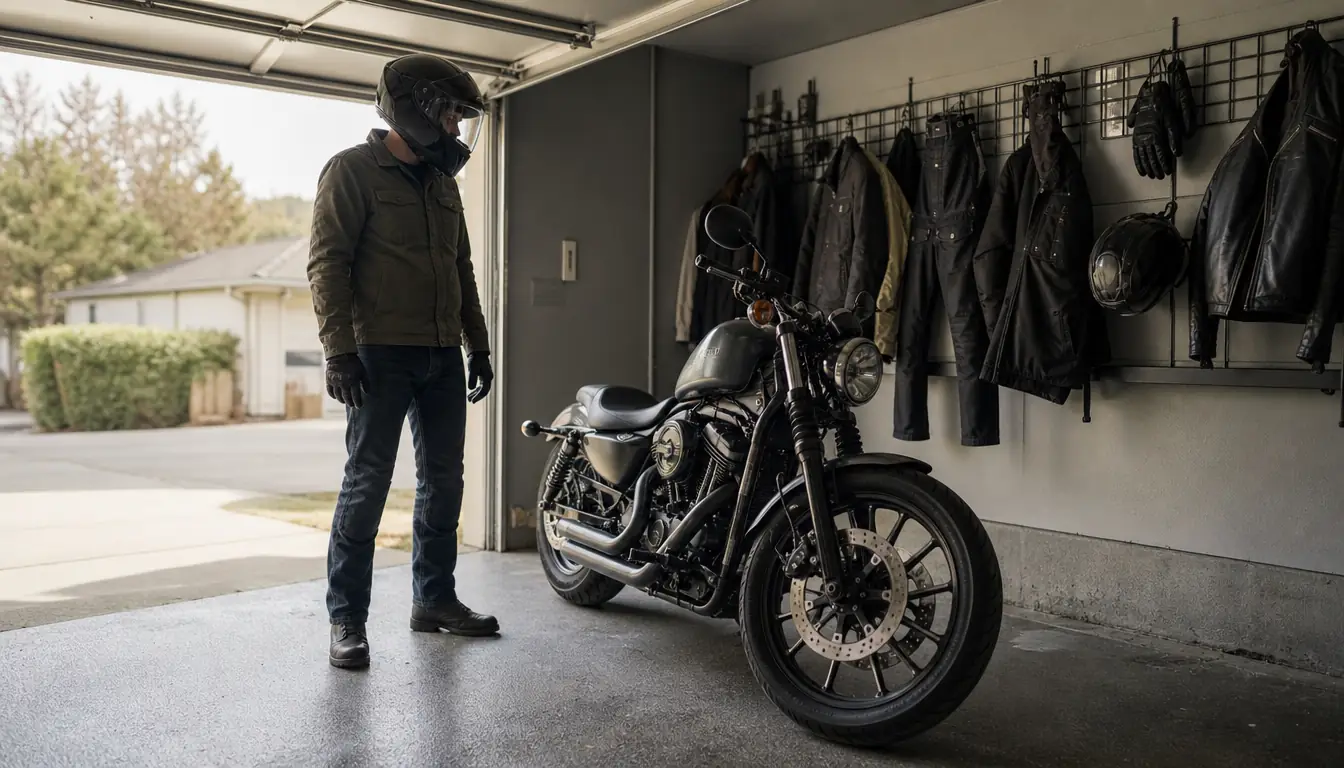
Two summers ago I rode Route 66 west out of Tulsa in a helmet that fit like an upside down bucket. By the time I got to Stroud my ears were ringing and I had a red band across my forehead that lasted until Tuesday. That is the plain reason I went looking at full face helmets again, and the reason the ILM-313 ended up hanging on the rack in my garage. I have a season of weekend rides on it now, a little over 2,400 miles, and I have opinions worth sharing.
I am 51. I have been riding weekends for about twenty years, and weekdays I am a maintenance supervisor here in Tulsa. My bike is a mid-size cruiser I have owned for six years. Most Saturdays I run 100 to 250 miles of two lane, out around Grand Lake or down toward Lake Tenkiller, and my wife Donna rides pillion maybe once a month. I am not a track rider. I am also not going to tell you a motorcycle helmet makes a crash survivable, because it does not. What I can tell you is how this one behaved over a full season of real Oklahoma riding.
The Quick Verdict
Quiet at highway speed, two visors for a full Oklahoma year, and light enough that my neck is fine after a 240 mile day. Hot at a standstill in July, which is true of every full face. I would buy it again at today's price.
Amazon Check Today's Price →The Helmet I Stopped Noticing by Mile 300
Full face, 3 pounds, clear and smoked visors plus a neck scarf in the box. Meets or exceeds FMVSS-218 and DOT standards. Check today's price on Amazon.
Amazon Check Today's Price on Amazon →How I've Used It
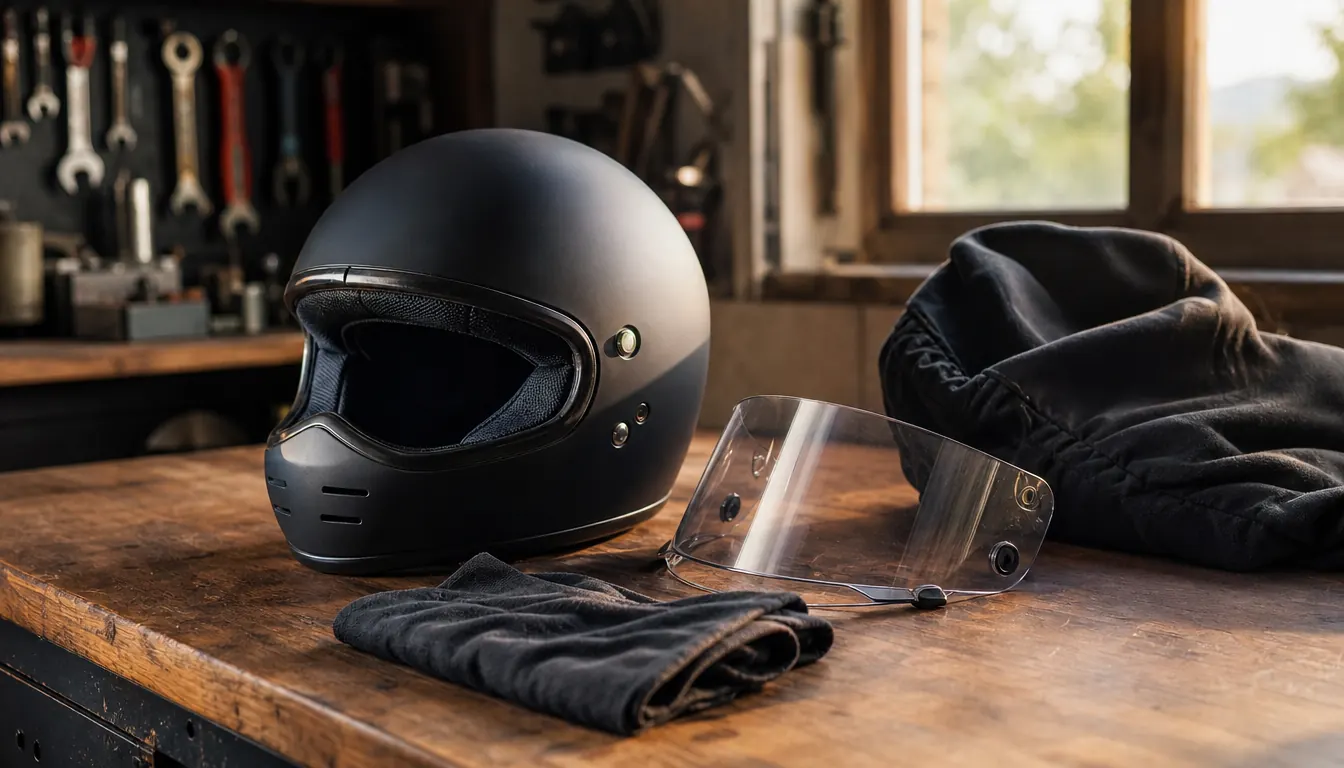
The box held the helmet with a clear visor already fitted, a smoked visor, a neck scarf, and a cloth bag. That is more than I expected. The bag went on the shelf, the scarf went on the wall rack, and the smoked visor sat in the garage until June.
First ride was a 40 mile shakedown out to Sand Springs and back, just to check the fit and the clasp. The quick release clasp took me three tries to get right because I had been using a different style for twenty years. By the end of that ride I could close it with gloves on without looking, and that is the only standard that counts when it is raining and you are standing next to a pump.
After that it went on every weekend ride from April into October. Route 66 east toward Claremore and west toward Chandler. The lake roads up around Grand Lake, which are the closest thing eastern Oklahoma has to twisties. One long Saturday down to Lake Tenkiller in July heat that hit 98 before noon. One wet, cold April morning where the temperature never got out of the fifties.
The ride I remember best was a Saturday in late September. Out the door at seven with the air at 61, east on 66 to Claremore, then north and east toward the lake, back through Pryor. 218 miles on the odometer. The helmet went on at seven and came off at five and I never once thought about it. Gear you notice is gear that is not working. That was the day I stopped reviewing this thing and just started wearing it.

The Shell, the Weight, and Highway Noise
The shell is ABS, the listing from ILM calls it advanced and lightweight, and the helmet is listed at 3 pounds. I put it on the kitchen scale out of curiosity and got 3.1, which is close enough for a bathroom scale and a man in his fifties. For a full face that is not heavy. I have worn heavier ones that left my neck stiff by three in the afternoon.
The shape is aerodynamic and the finish is glossy. I read that aerodynamic line on the listing and filed it under marketing, the way I file most things. Then I got out on 66 at highway speed and noticed I was not fighting the wind the way I expected to. A cruiser with no fairing pushes a lot of air straight at your head. This shell cuts through it instead of catching it, and the difference is not subtle.
Wind noise is the part that matters most to me because I already have enough ringing in my ears from twenty years of this. It is not silent. No helmet is, and anyone who tells you otherwise is selling something. But the noise drops to a low rush instead of the whipping and buffeting I got before, and I can hear the engine, the tires, and a car coming up behind me. On a two lane with a truck passing the other way, hearing that car matters.
Two Visors, the Liner, and the Neck Scarf
You get a clear visor and a smoked one. The clear comes fitted. I ran clear through April and May, which here means gray mornings and one very wet ride home. Then June arrived and the sun came out for real and I made the switch.
Swapping visors is a two handed job and I do it on the workbench in the garage, not on the shoulder of the road. It takes a couple of minutes and I have gotten faster. The smoked visor lives on the helmet from June through September and the clear goes back on in October when the days get short. Riding into a low sun with the smoked visor on is the difference between seeing the road and guessing at it, and guessing at it on 66 is a bad habit.
Gear you notice is gear that is not working. That was the day I stopped reviewing this thing and just started wearing it.
The inner lining pads come out. That sounds like a small thing until you have spent a summer in a helmet you cannot wash. Mine came out, went in the sink with a little dish soap, dried on the porch, and went back in. The pads are also the reason the fit is adjustable in a small way, and ILM notes that you can order another set of liners if you want a snugger fit.
The neck scarf is the piece I ignored until October. It is a simple tube of fabric and it does more for a cold morning than any gadget I have ever bolted to a helmet. In the forties it kept the wind off my throat and stopped the draft coming up under the chin bar. In July it lives in the garage. For the money it is the most useful thing in the box after the smoked visor.
Fit, the Clasp, and Why I Picked This One
Fit is where most helmets lose me. I am between sizes on a lot of them, which means I either get one that clamps my temples or one that swims and lifts at highway speed. The ILM-313 landed right in my normal size. Snug at the cheeks, no pressure point above the eyebrow, no lift when I turn my head to check a lane. I wore it for a full day the second weekend to be sure, and it stayed comfortable past the four hour mark.
The quick release clasp and strap is the part I had to unlearn old habits for. Twenty years of a different buckle is hard to overwrite. The first weekend I fumbled it. The second weekend I had it. Now I can put the helmet on, close the clasp, and get my gloves on in about fifteen seconds at the pump in Chandler, and that is my benchmark for anything that goes on a motorcycle.
Putting the liner back in takes a little care. The pads go back where they came from or the fit changes on you, so the first time I pulled them I took a picture of the inside with my phone. That is not a knock on the helmet. That is me being careful with something I would rather not get wrong.
Before I bought, I looked at three helmets. A cheap full face from a big box store with one visor and a liner that did not come out. A well known brand at roughly three times the money with features I would never use on a weekend ride. And this one. The ILM-313 sat in the middle with two visors, a removable liner, a quick release clasp, and a five year manufacturer warranty. If I rode 12,000 miles a year instead of 2,400 I might have made a different call. For weekend miles, the math was easy.
Heat, Long Days, and the Honest Tradeoffs
Here is the downside and I am not going to dress it up. A full face helmet is hot when you are not moving. On a July Saturday in Tulsa you will sit at a light on Riverside Drive and feel the heat build inside the shell. The ILM-313 is no worse than any full face I have worn and better than a couple, but it is a full face. If you have been riding in an open face for twenty years, you will notice, and you will notice it most in August.
It fogs. Not badly, and not for long. On that cold April ride it fogged at the first stoplight and cleared as soon as I was moving again, which is what full faces do. I have not added anything to it and I have not needed to.
The 3 pounds is what saves it on a long day. My neck is the part that complains first and I finished a 240 mile Saturday in July without the stiffness I used to get from an older, heavier helmet. Some of that is the weight and some of it is the shape and some of it is that it fits well enough that I am not holding my head against it for six hours.
I have not crashed in this helmet and I am not going to pretend a review can tell you how it does in a crash. What I can tell you is that it meets or exceeds FMVSS-218 and DOT standards, that the shell feels solid when you press on it, that the clasp has not slipped once in a season, and that ILM backs it with a five year manufacturer warranty and sells replacement liners and parts. Years ago I went down at low speed on gravel and walked away with scraped gear and a sore wrist. That is the whole reason I pay attention to this now instead of buying whatever is on the shelf.
What I Liked
- Quiet at highway speed, because the aerodynamic shell cuts the buffeting that wears you out on a two lane.
- Two visors in the box, clear and smoked, which covers most of an Oklahoma year.
- 3 pounds, so my neck is fine after a 240 mile day.
- Removable liner you can actually wash after a hot summer.
- Quick release clasp is easy with gloves once you learn it.
- Five year manufacturer warranty and replacement liners available.
Where It Falls Short
- Hot at a standstill in July. Every full face is, and this one is no exception.
- Swapping visors is a bench job in the garage, not a roadside job.
- The clasp takes a few rides to learn if you are coming from another style.
- Gloss finish shows dust and bug hits, so it wants wiping more often.
- Not a modular, so the chin bar does not flip up at a gas pump.
Who This Is For
This is for the weekend rider doing 100 to 250 miles on two lanes who wants one helmet that handles a cold April morning and a hot August afternoon without buying two. It suits a rider coming off an open face or a bargain helmet who wants a full face with two visors, a removable liner, and a clasp that works with gloves. ILM lists it for street bikes, cruisers, touring, scooters, and even ATV and UTV use. On my cruiser it does exactly what I need. If Donna ever decides she wants her own, this is the one I would point her at.
Who Should Skip It
Skip it if you ride mostly stop and go city traffic in summer, because a full face is going to cook you at every light and washing the liner will not fix that. Skip it if you want a chin bar that flips up at a gas pump, because this is a fixed full face and it is not trying to be anything else. Skip it if you are a track rider with a specific certification requirement, because this is DOT and FMVSS-218, not a racing helmet. And skip it if you will not spend ten minutes learning the clasp, because a clasp you have not practiced is a clasp that slows you down when you are already late.
One Season, 2,400 Miles, and I Would Buy It Again
Full face, 3 pounds, clear and smoked visors, neck scarf and bag included. DOT and FMVSS-218 rated with a five year manufacturer warranty. Check today's price on Amazon.
Amazon Check Today's Price on Amazon →