
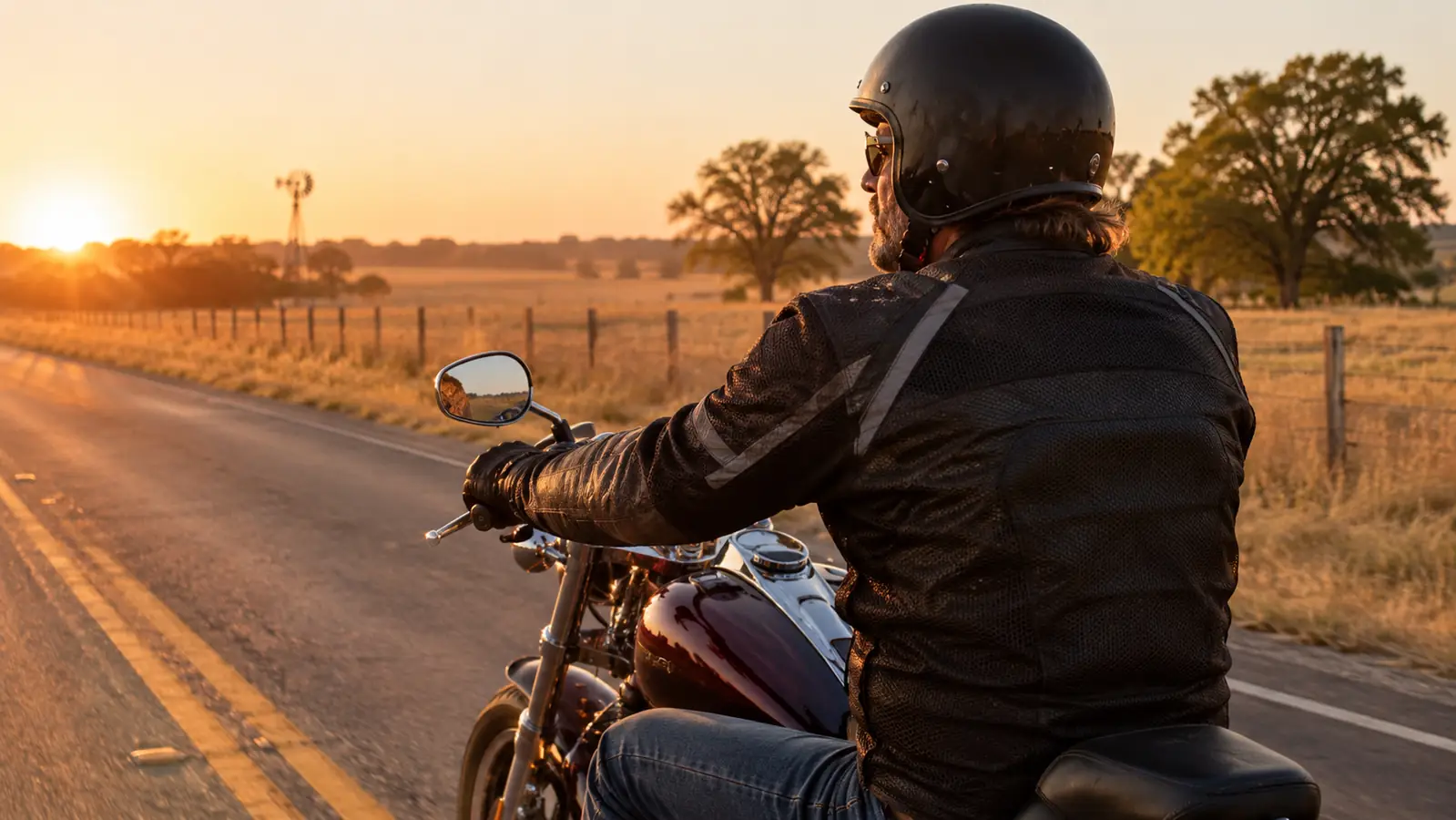
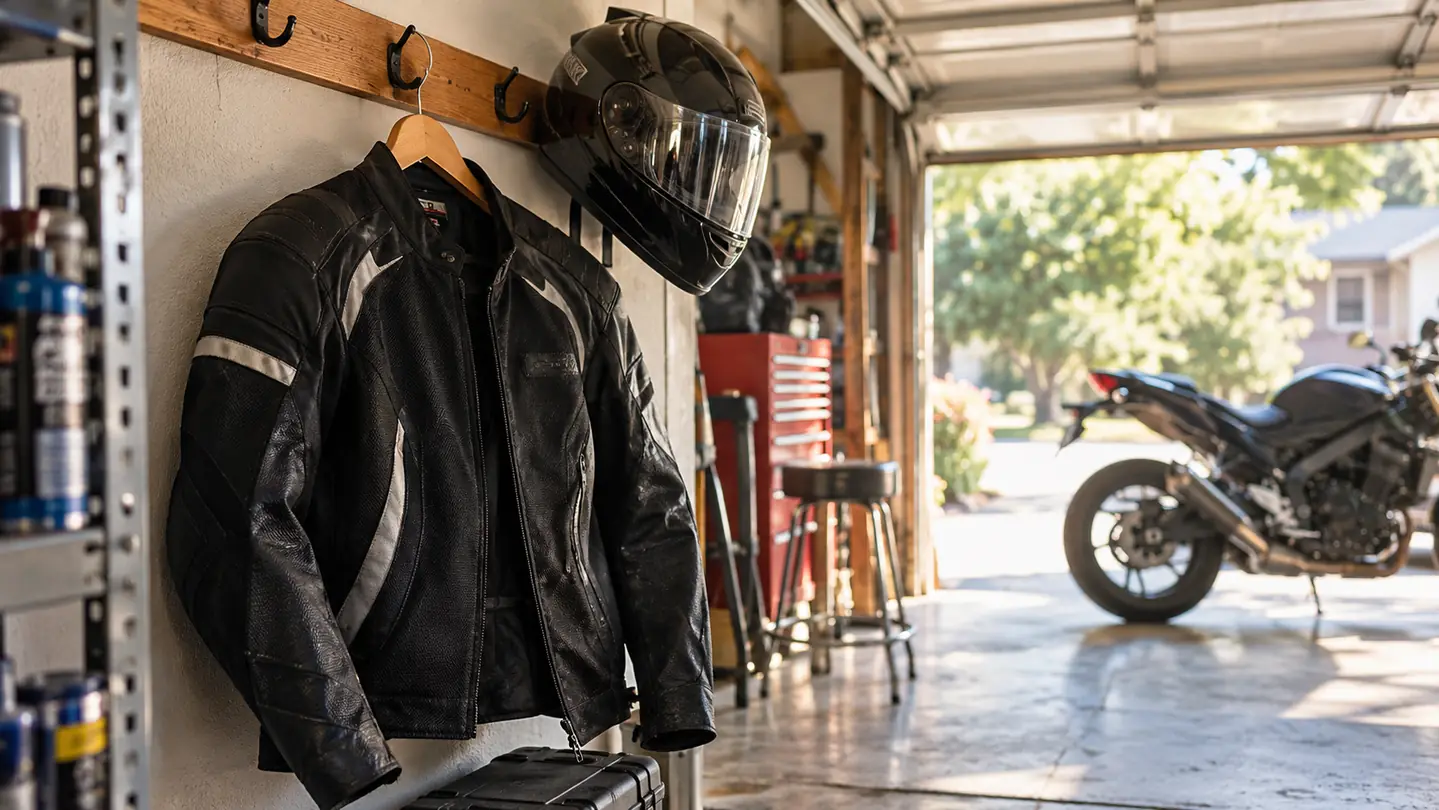
Oklahoma in July gives a rider two choices: bake, or find a way to move air. For years I picked bake. Every mesh jacket I tried felt like a plastic bag with holes punched in the wrong spots, so I would leave it on the wall rack in the garage and ride in a t-shirt instead. I ride a mid-size cruiser, 100 to 250 miles most weekends, out along Route 66 and the lake roads around Grand Lake, and I know exactly how that t-shirt decision ends. This summer I ran the BYKR mesh jacket instead, from the first hot Saturday in June through the cool mornings in late September, and I kept notes.
Here is the short version. The BYKR jacket moves real air once you are moving, it fits like a jacket instead of a wind sock, and it came through about 1,400 miles of heat, gusty crosswinds, and one fast storm west of Claremore without a seam letting go. It is not perfect, and the parts I do not love are further down. There are three of them, and one is about rain.
The Quick Verdict
Moves air where it counts, fits a normal human torso, and survived a full Oklahoma summer. The rain protection is a shrug, not a promise.
Amazon Check Today's Price →The jacket I stopped leaving on the garage wall
If your summer riding has come down to a choice between sweating and skin, this is the one I would start with. Same jacket I rode all season, current price, nothing marked up by me.
Amazon Check Today's Price on Amazon →How I've Used It
I put it on for the first time on a Saturday in early June, 96 degrees, riding from Tulsa out to Grand Lake and back, about 180 miles with a lunch stop in Langley. The first thing I noticed is what I always notice with mesh, which is the difference between standing still and moving. At a red light on Route 66 in Sapulpa you will be warm. Everything is warm at a red light, including a t-shirt. Once you are above 30 miles an hour the air comes through the front and out the back, and the difference is not subtle. By the time I got home my shirt was damp at the shoulders and dry everywhere else, which is more than I can say for the t-shirt rides.
I rode it every weekend after that, plus a couple of Wednesday evenings after work when the shop was quiet. Total for the season, worked off my odometer and a fuel log, came to about 1,400 miles. Two of those rides were over 200 miles. One was a slow loop around Lake Tenkiller with a lot of second and third gear two-lane. The other was a long day east of Tulsa when the wind sat at 25 out of the south and never let up. That second kind of day tells you more about a jacket than any showroom ever will, because a loose jacket in a crosswind beats you up and a stiff one will not let you breathe.
I also wore it the way most of us actually wear gear. Over a t-shirt on the way to the shop. Over a long sleeve on the cooler mornings in September. Once over a hooded sweatshirt when I misjudged a 58 degree start and did not want to turn around. It layered fine in all three cases. I am 5 foot 10, about 195 pounds, and my usual size is XL, which is what I ordered. The regular fit is honest, and that is worth saying out loud, because fit is where most mesh jackets fall apart for me.
Airflow and Heat on a Two-Lane Road
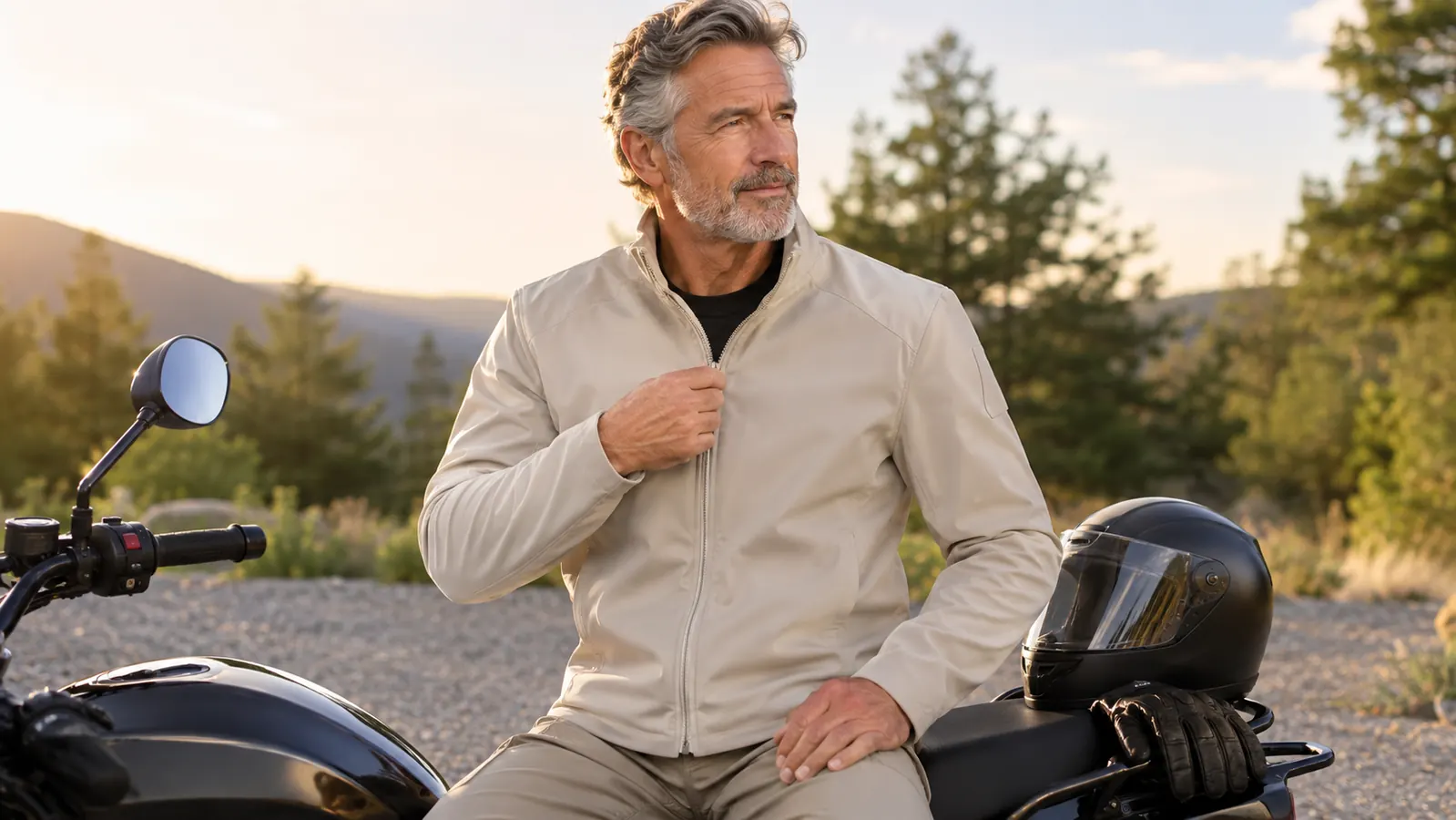
Mesh is not a magic fabric. It is a trade. You get air in exchange for less material between you and the road, and the quality comes down to where the open panels sit and how the jacket is cut around them. On the BYKR, the chest and the long sleeves are the open part, so the air hits you where you feel it first on a cruiser, sitting up with your arms out. Above about 95 degrees moving air stops helping much, honestly, because the air is the same temperature as your skin. There is nothing any jacket can do about Oklahoma in August, and I would be lying if I told you otherwise.
One detail I did not expect to care about: the air coming through the chest does not flutter. Cheaper mesh jackets I have owned will pulse against your shoulders at 60 miles an hour, and by the end of a long day it feels like being tapped on the arm for four hours straight. This one sits still. The panels stay where they were cut to stay, and I noticed the quiet more than I noticed any single feature.
What it does do is keep the sun off and cut the wind, and that combination matters more than I expected. On the t-shirt rides I would come home with the tops of my arms cooked and a low grade headache that I blamed on the heat. With the jacket on, my arms were fine and I was less worn out at the end of the day. Some of that is shade. Some of it is not fighting a 25 mile an hour headwind for four hours. Either way, the difference after a 200 mile day was obvious enough that Donna noticed it before I said anything about it.
I have a heavier textile jacket that has lived in the garage for years and I still use it when the weather turns. Riding the two back to back in July made the trade obvious. The textile jacket is quieter in wind and holds up better in rain, and I would not want to be without it in February. The mesh jacket is the one I reach for when the forecast says 95, because the difference in comfort is the difference between arriving fresh and arriving cooked. Two jackets, two jobs. If you only ride in summer heat, you only need one of them.
Fit, Zippers, and the Four Pockets
Fit is regular, and I mean regular in the plain sense. Not slim, not a tent. There is room at the waist, room to raise your arms without the hem climbing up your ribs, and the sleeves are long enough that the cuffs land at the wrist and stay there with your arms out on the bars. The closure is a full length zipper, and it has not caught or skipped once in a season of use. The band collar sits close without strangling you, which matters more than it sounds like it does, because a collar that flaps at highway speed will wear you down in twenty minutes.
Sizing deserves its own paragraph because it is the question I get asked most. My chest measures 44 inches, my usual size is XL, and the XL fit with room for a long sleeve underneath without feeling like a sack with just a t-shirt on. If you are between sizes and you plan to layer in spring and fall, take the larger one. If you are between sizes and you ride in July with nothing under it, take the smaller one. That is not a dodge. It is the same advice I would give you standing in my garage.
Four pockets is the number the listing gives, and it is accurate. I did not use all four. I used one for earplugs and a folded registration slip from June to October and never lost either, and the jacket did not sag on that side the way a cheap one will. The zipper on the main closure is a real zipper with some substance to it. The piping along the seams has stayed flat with no curling, and the jacket has been washed twice and hung to dry both times, which is the only care routine I follow because it is the only one I know.
The Rain Question
The listing calls it water resistant and windproof, and I would take those two words at different weights. Windproof, yes, absolutely. On that windy day east of Tulsa it cut the push on my chest down to almost nothing. Water resistant is the accurate phrase, and waterproof is the one to be careful with. I got caught on the Will Rogers turnpike with about ten minutes of hard rain before I could get under a bridge. I stayed mostly dry through the chest and got wet at the shoulders and the forearms. For a pop up storm that is fine. For a two hour rain ride it is not a rain jacket and I am not going to pretend it is.
One more thing about rain, and this is true of every mesh jacket I have owned, not just this one. Mesh holds water. Once it is soaked it stays soaked until you are moving again, and then it is cold. In Oklahoma in the spring the storms come up fast, so plan for that. I keep a light rain shell folded in the saddlebag now. It takes up about the space of a sandwich and it has already saved two rides.
Windproof, yes. Waterproof, no. Ten minutes of hard rain got through at the shoulders, and I would rather know that before I buy than find out under a bridge.
What It Does Not Do
Let me be plain about the protection part, because this is where a lot of gear writing goes wrong. The jacket is built for riding and it has protective elements in it, but no jacket makes a crash survivable and I am not going to write around that. I had a low speed slide on gravel years ago, maybe 15 miles an hour, and it still chewed through a jacket and left me with a sore wrist for a month. What gear buys you is margin. It buys a layer between your skin and the road, and on a hot day it also buys the willingness to actually put the thing on instead of leaving it at home. That last part is the honest case for mesh, and it is why this one stays by the door.
Two other small things worth flagging. The listing says all seasons and I would read that as a catalog field rather than an honest claim. This is a warm weather jacket with some wind blocking, and that is what I used it for; in November it goes to the back of the rack and the heavy textile comes out. The other thing is the material field on the product page, which says leather. This is a mesh jacket, so ignore that field. It reads like a data entry slip from a feed, and I bring it up only because I have seen riders get hung up on it in the questions section and start doubting the whole listing.
What I Liked
- Real airflow through the chest and long sleeves once you are moving
- Regular fit that does not balloon or beat you up in a crosswind
- Full length zipper and a band collar that stays put at highway speed
- Four usable pockets that hold a phone and a registration slip without sagging
- Cuts wind and sun, which matters more over 200 miles than most riders expect
Where It Falls Short
- Water resistant only. Ten minutes of hard rain reached my shoulders and forearms
- Mesh holds water and rides cold once it is soaked through
- Above about 95 degrees no mesh jacket helps much, this one included
- The listing's material field says leather, which is simply wrong for a mesh jacket
Who This Is For
This is for the rider who does 100 to 250 miles on a summer weekend in real heat and wants to stay covered while doing it. Two-lane highways, lake roads, a lot of time between 40 and 65 miles an hour, which is the range where mesh works best. It is also for anyone who has been riding in a t-shirt and knows better. The jacket is easy to put on, easy to live with, and it does not need a ritual, which is the whole point. Gear you will actually wear beats better gear that stays on the rack, every single time.
Who Should Skip It
Skip it if you commute in rain and need real waterproofing, because this is not that jacket and hour two will disappoint you. Skip it if you ride mostly in cold weather. The mesh that saves you in July is a liability in January, even layered. Skip it if you want a fitted sport cut, since this is a regular fit built for sitting up on a cruiser or a dual sport rather than folded over a tank. And skip it if you are shopping for something that makes a crash survivable. Nothing does that. Buy margin, not immunity.
One summer, 1,400 miles, and it still hangs by the door
If you ride hot and you want to ride covered, this is the simplest way to stop choosing between the two. Check the current price and the size chart before you order, and size up if you plan to layer.
Amazon Check Today's Price on Amazon →