
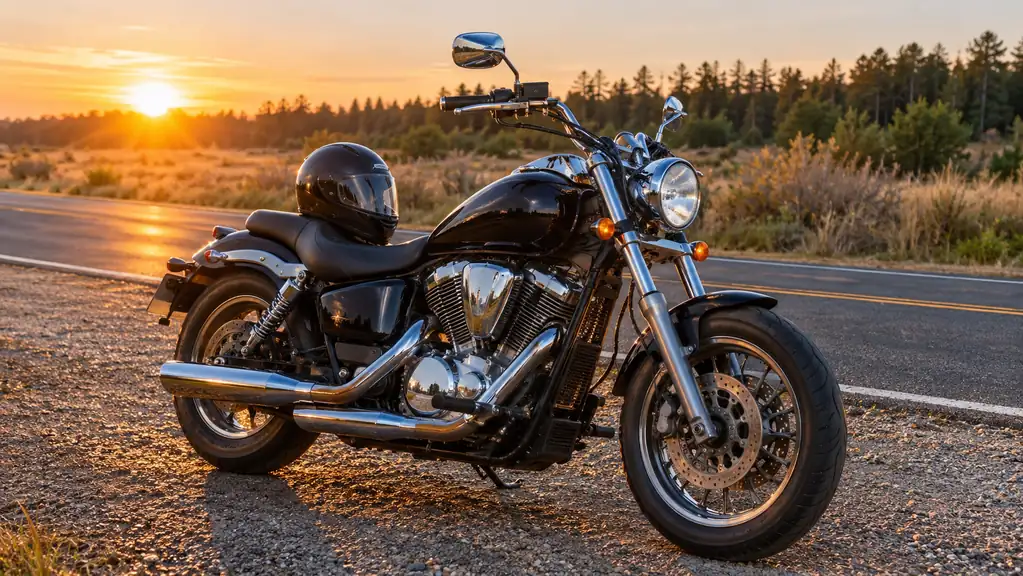
My cruiser has one job on a Saturday: get me out of Tulsa before the heat settles in. Route 66 west toward Sapulpa, or the long way around Grand Lake if Donna wants to come along. For most of twenty years of weekend riding, the soundtrack was the engine, the wind, and whatever I happened to be thinking about. Then I mounted the Cardo Spirit to my helmet and the ride picked up music, phone calls, and a voice telling me to turn left in half a mile. On balance, a good trade.
I have run the Cardo Spirit for months now, on 100 to 250 mile days, through spring storms and July heat and one cold morning in November that I did not dress properly for. Long enough to stop noticing it, which for a helmet headset is the entire ballgame. Long enough to have honest complaints, too. This is not a first-week impressions piece. It is what real miles on Oklahoma two-lanes did to my opinion of a 150 gram Bluetooth unit.
The Quick Verdict
Light, simple, and it pairs with anything. The Cardo Spirit handles music, calls and rider-to-rider Bluetooth without fuss. It is not a mesh system and it will not cancel a crosswind, and it does not pretend to.
Amazon Check Today's Price →The headset I stopped noticing by the second mile
Cardo Spirit. One unit, 150 grams, pairs over Bluetooth with any headset of any brand, updates through the Cardo Connect app.
Amazon Check Today's Price on Amazon →How I've Used It
My routine is boring and that is the point. Saturday morning I check the tires, top off the tank, and pull out of the garage with a destination I usually change twice before I clear the city limits. Grand Lake, Lake Tenkiller, sometimes just Route 66 west until I get hungry. Somewhere between 100 and 250 miles, home before dark. Donna rides pillion on maybe one Saturday in four and she does not ride her own bike, so two-up conversation is not something I can test often or honestly.
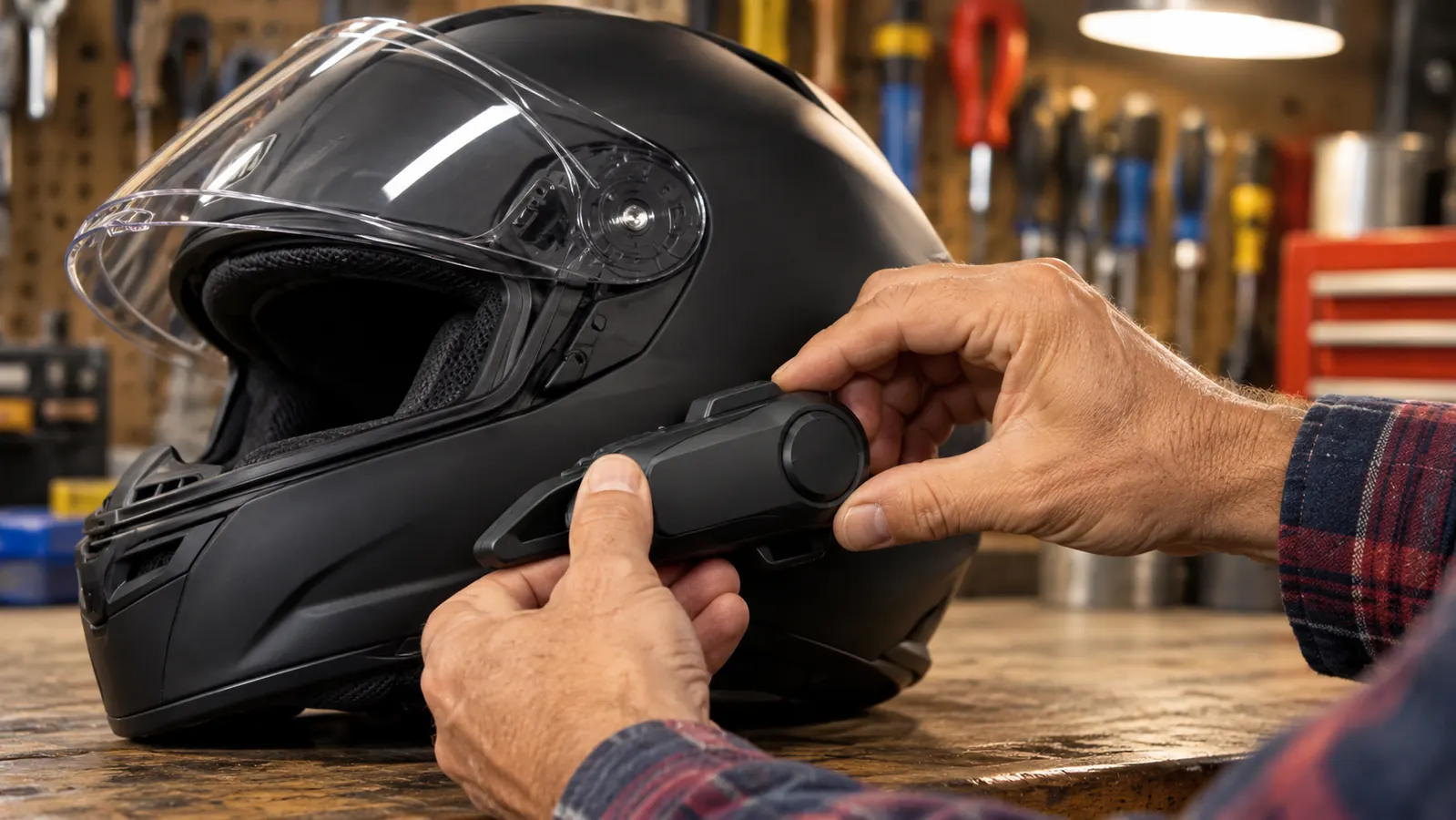
The Cardo Spirit went on the same helmet in February and has stayed there. Rain, heat, one hailstorm I rode around instead of through, and a lot of dust off gravel county roads. I mounted it in the two-car garage where the bike lives, on the wall rack where my gear hangs, and it has never given me a reason to pull it off and leave it home. That sounds like a low bar. It is not. I have owned gadgets that needed a reason to come along, and they live in a drawer now.
One Saturday in June sticks in my head as the fair test. I left the garage at 7:40 with the temperature already at 78, ran east toward the Grand Lake dam, took the long way around the east side, and got home at 3:15 with 214 miles on the trip meter and the outside temp reading 94. Music the whole way. Two navigation prompts I genuinely needed. One gas stop where I pulled the helmet off and the unit stayed exactly where I had put it. Nothing about the headset required my attention all day, which is the highest compliment I can pay a piece of motorcycle electronics.
Here is the honest frame for the rest of this review. I am not a group-ride guy with a dozen buddies on the same system. I am one rider on one mid-size cruiser who wants music on the boring stretches, a phone call to my wife if I am running late, and directions that do not require stopping to squint at a screen at 60 miles an hour. That is exactly the job the Cardo Spirit was built for, and I tested it against that job rather than against a touring setup that costs several times as much.
Pairing, the App and Over-the-Air Updates
Pairing was the part I expected to fight, and it did not fight back. Turn the unit on, open the Cardo Connect app on the phone, and it finds it. From there the settings live somewhere you can see them instead of in a sequence of beeps you have to memorize off a card in the garage. That matters more than it sounds like it should. Half the frustration of helmet audio is trying to change one thing with gloves on while the bike idles in the driveway and your neighbor watches you lose an argument with a beep.
For contrast, the no-name headset I tried a couple of years back took four attempts and a video tutorial before it would hold a connection, and then it dropped that connection every time I shut the bike off for gas. The Cardo Spirit paired in one pass, in the driveway, before I finished my coffee, and it has held that same pairing since February without me redoing it once. I have not had to re-pair after a dead battery, after a software update, or after a phone restart. Small thing. Also the exact thing that makes people stop using a headset.
Cardo ships the Spirit with over-the-air software updates through that same app, and it is worth ten minutes at the kitchen table now and then. I start the update, pour coffee, and it is finished before the mug is empty. Generation 2 hardware running current software is a small thing that adds up over a couple of years, because the fixes come to you instead of the other way around. No cable needed either, which suits a garage that already has enough tangled ones hanging on the wall.
The control method listed for the Spirit is the app, and that is the honest description. If you want a headset you never have to pair with a phone, understand that the Cardo Connect app is part of the kit, not an optional extra. I keep my phone in a jacket pocket, glance at it when I stop for gas, and use voice for everything while the bike is moving. Once the volume and the pairing are set, I go weeks without opening the app at all.
The Cardo Spirit pairs with any Bluetooth headset of any brand, holds 150 grams on a helmet I forget about, and carries a two year manufacturer warranty. The wind still wins above 70. That is the whole honest summary.
Sound, Wind and Phone Calls at Highway Speed
The Spirit runs a 32 millimeter dynamic driver, which is a bigger speaker than you would guess fits inside a helmet liner. At 55 on Route 66 with a windshield in front of me, music came through clearly enough that I could follow a bass line and hear a lyric. At 75 on the turnpike in a crosswind it is still there, but you are hearing it through the wind instead of over it. That is not a knock on the Spirit so much as physics with a helmet on your head.
The active noise cancellation does real work on steady wind roar. Notice I said steady. A gust, a passing semi, an expansion joint on a bridge, none of that gets cancelled, and I would not trust a headset that claimed otherwise. What it does is pull the constant hiss down a notch, which means I listen at a lower volume, and a lower volume over four hours is a lot kinder to your ears than a loud one over four hours.
Phone calls work well enough that I actually take them. Donna has called me twice on the road, both times about something that could have waited, and both times she said I sounded like I was in a truck with the windows down. That is a fair description of what is really happening. Below about 55 I hear her fine. Above that I am saying what more often than I would like, so now I let it ring and call back from the next stop.
The call I remember was in April, on Route 66 west of Bristow, doing about 60 into a headwind. She wanted to know whether I was eating at home. She got the whole answer on the first try, no repeating myself, no shouting. That is a low bar until you have tried it on a headset that turns your voice into a paper bag held in front of a fan, and then it stops being a low bar and starts being the reason you keep the thing charged.
One thing nobody tells you about any helmet headset: the fit of the speakers against your ears matters more than the spec sheet. I moved the pads about ten millimeters and gained more clarity than any setting in the app ever gave me. If the Spirit sounds thin to you, move it before you return it.
Talking to Other Riders, Whatever They're Wearing
This is the feature that sold me, and it is the one I would tell a friend about. The Spirit connects over Bluetooth to any other Bluetooth headset of any brand, which reads like a line off the box until you are standing in a gravel lot outside a diner next to a rider whose headset came from a completely different company, and it pairs anyway. No ecosystem lock, no brand loyalty test, no swapping gear just to talk to the guy you met at a fuel pump. For a weekend rider who ends up riding with strangers now and then, that is worth more than a longer feature list.
Last fall that happened for real outside a diner east of Claremore. The other rider was on a bike from a different manufacturer entirely, running a headset from a company Cardo does not make, and neither of us had any idea whether it would work. We paired at the picnic table in about a minute and spent the next forty miles on the same channel, which turned into breakfast the following Saturday. I have never once had to ask somebody what brand they were running before I could talk to them. That is why universal pairing belongs in large letters on the box instead of buried in a bullet list.
The catch is the one-pack. The Spirit ships as a single unit, so if you want to talk to a passenger you are either buying a second one or pairing with whatever your passenger already owns. Donna does not have a headset, so when she rides pillion we still tap each other on the shoulder at stops like it is 2004. That is fine, and it is also the difference between this unit and a proper two-up intercom set.

The Weight, the Warranty and What Months Changed
The Spirit weighs 150 grams according to the spec sheet, which is roughly a decent pair of work gloves. On a helmet that is light enough that I forget it is there, and I have a neck that reminds me about things. My helmet did not need rebalancing or re-fitting. It mounts and stays put, the enclosure is plastic, and it has shrugged off two seasons of Oklahoma sun without the finish going chalky or the mounting loosening up.
The heat is the real test out here, not the cold. From late June through August the inside of a parked helmet in my garage gets genuinely hot by mid afternoon, and that is where cheap electronics go to die. Six months in, the Spirit still powers up on the first press, still holds its charge across a week of sitting, and still connects before I have my gloves on. I cannot tell you how many years it will last. I can tell you it has not started acting tired yet.
Two years of manufacturer warranty is the quiet part of the deal. I have not needed it, and I like knowing it is there, because the failure mode I worry about with helmet electronics is not a crash, it is a solder joint giving up in July heat. Beyond that, the small stuff is what keeps it on my helmet: no cable to route, nothing to fiddle with once it is set, and an app that does not demand attention every time I swing a leg over the bike.
Three honest complaints after months of use. First, this is a Bluetooth headset and not a mesh system, so a large group ride with a dozen people all trying to stay in contact is not what it is for. Second, the app is not optional, and if you want a phone out of the loop entirely that will annoy you. Third, above about 70 miles an hour in a crosswind the wind wins, cancellation or no cancellation, and any rider who tells you otherwise is selling something.
None of those are dealbreakers for me. They are the reasons I would not tell a touring rider with eight friends on the same channel to buy this and call it done. Match the tool to the job, and this tool does one job well.
What I Liked
- Pairs over Bluetooth with any other headset brand, no ecosystem lock
- 150 grams on the helmet, light enough to forget about
- Settings and over-the-air updates run through the Cardo Connect app
- Two year manufacturer warranty
- Music, navigation prompts and phone calls in one unit with no cable
Where It Falls Short
- Ships as a one-pack, so a passenger needs a second unit
- Bluetooth rather than a mesh system, which complicates large group rides
- The app is part of the kit, not optional
- Above about 70 miles an hour a crosswind still drowns everything
- Speaker placement inside your own helmet matters more than any setting
Who This Is For
This is for the solo weekend rider who wants music, navigation prompts and the occasional phone call without paying touring-system money. If you ride 100 to 250 miles on a Saturday, mostly alone or with one other person, and your helmet has room to mount a unit, the Spirit covers that whole list without asking much of you. It also suits the rider who ends up alongside people on different gear, because universal pairing means you are not the one left out of the conversation at the overlook.
Who Should Skip It
Skip it if you ride in a group of four or more and need everybody on the same channel all day. Skip it if you want rider-to-passenger conversation and neither of you owns a second unit, because one box gets you one unit. Skip it if you want a phone-free helmet with no app anywhere in your life. And skip it if you expect a headset to erase highway wind, because nothing does, and buying on that promise will leave you disappointed in a product that is otherwise doing its job.
If your Saturdays are 200 miles of two-lane, this earns its spot on the helmet
The Cardo Spirit is the version I would hand a friend who rides alone on weekends. Universal Bluetooth pairing, app updates, two year warranty.
Amazon Check Today's Price on Amazon →