

I was forty miles east of Tulsa on Route 66 with a crosswind leaning on me when the phone rang inside my jacket. I did not hear it. I found out at the fuel stop, where the screen showed two missed calls from Donna and one from the shop. Nobody was hurt and nothing was on fire, but I stood there in the gravel feeling like an idiot. I had spent years telling myself that a phone in a chest pocket counted as being reachable. It does not. That afternoon is why a Bluetooth headset went on my helmet and stayed there.
Short answer: the Cardo Spirit is the one on my helmet and the one I would buy again. The LEXIN G2P is a fair option for a different rider, the one who wants a button under a gloved thumb and no app anywhere near his phone. Both put sound in your helmet and a microphone at your chin. The difference is in how much of the work happens on the unit and how much happens on your phone, and which of those two you find less annoying at a fuel stop with the wind coming across the pumps.
| Cardo Spirit | LEXIN G2P | |
|---|---|---|
| Pairing with other riders | Bluetooth pairing with headsets of any brand, per the listing | Pairs to a phone for music and calls; cross brand pairing is not something I could confirm |
| Everyday controls | Settings and updates run through the Cardo Connect app | Buttons on the unit, nothing to install |
| Software updates | Over the air, through the app, no cable needed | Runs whatever firmware it ships with |
| Unit weight | 150 grams | Not published in a form I could verify |
| Warranty | 2 years from the manufacturer | Confirm the current terms with the seller |
| Speaker | 32 mm dynamic driver | Helmet speakers that sit in the ear pockets |
| Best for | One helmet, one unit that talks to everything and improves over time | A rider who wants buttons in the cold and no phone in the loop |
How I Compared Them
I ran the Cardo Spirit on my cruiser for a full season of weekend rides, the hundred to two hundred fifty mile loops out Route 66 and around Grand Lake. The G2P reached me for two afternoon rides, lent by a rider in my area who wanted a second opinion before he outfitted a second helmet. So this is not a lab test. It is one rider, one helmet, two headsets, and a lot of two lane highway with the wind coming off a wheat field.
The rules I set for myself were simple. Everything had to work with gloves on. Everything had to survive a hot Oklahoma afternoon and a sudden spring storm. Nothing counted if it only worked in the garage. I paired both units to the same phone, used both for music and for calls, and paid attention to the things that irritate you on mile 180 rather than mile 8. Most gear reviews are written at mile 8.
One caution before we go further. I am one person, and the G2P was with me for two afternoons rather than a season. Where I could not confirm something, the table above says so instead of guessing. A comparison that pretends to know everything is worth less than one that tells you where the evidence stops, especially when you are about to spend your own money.
Where the Cardo Spirit Wins
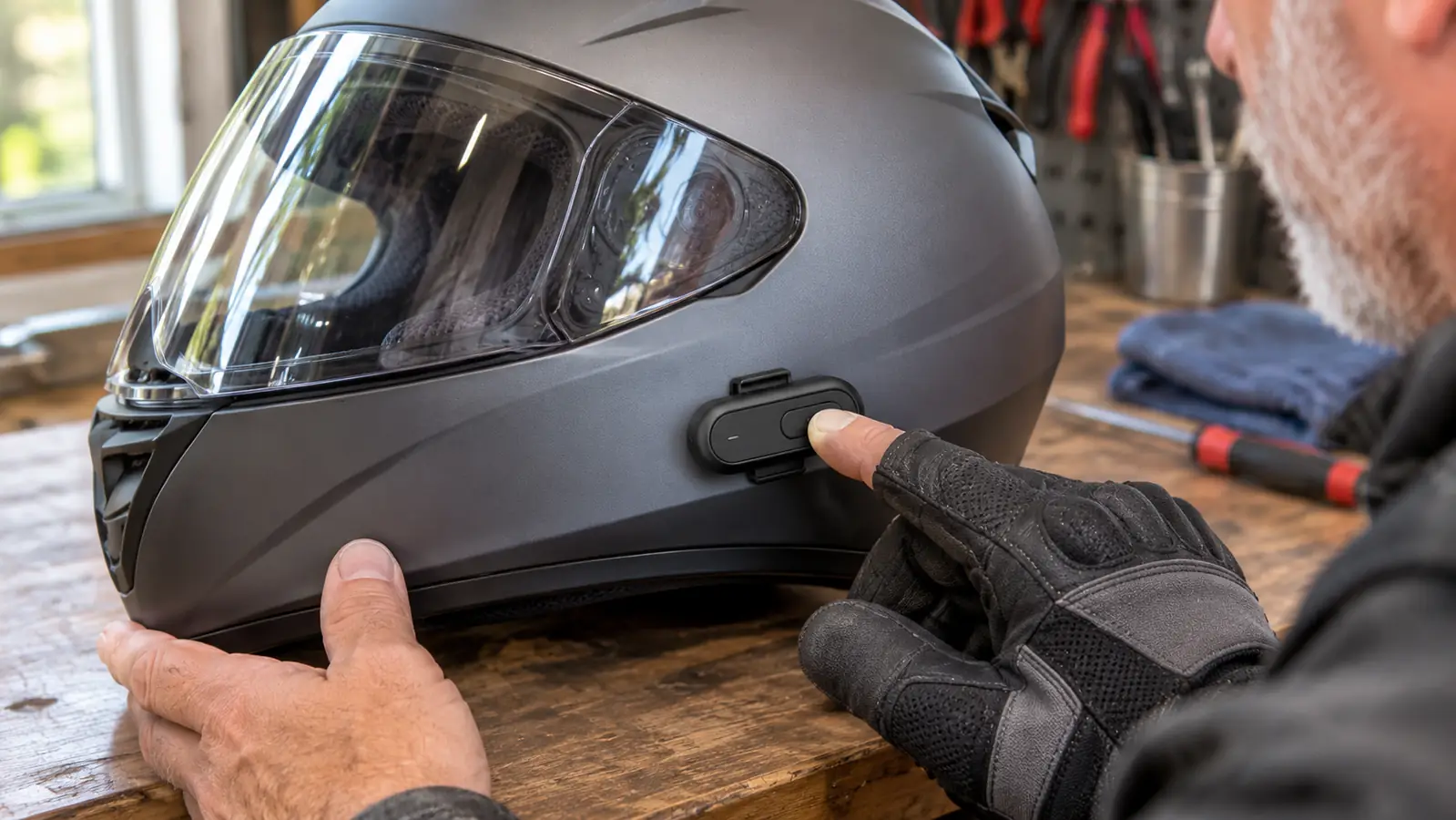
The first win is the one in the listing that sounds like marketing and turns out to be real: universal connectivity. The Spirit pairs with Bluetooth headsets from other brands. I have paired it with a headset that has no relationship to Cardo at all, standing in a gravel lot with the wind trying to take my phone out of my hand, and it took on the first attempt. If you ride with people who bought whatever was on the shelf at the time, that matters more than any feature sheet printed on a box.
The second win is over the air updates through the Cardo Connect app. This is the quiet one. A headset is a small computer now, and small computers either get better or they get abandoned. When an update drops, the app pulls it to the unit without a cable and without a trip to a service counter. Two years in, the Spirit on my helmet runs newer software than the one that shipped. Most riders will never think about that. The ones who keep gear for six or seven years will notice it every spring.
The third is the boring stuff that decides whether a thing stays on your helmet or ends up in a drawer. The unit weighs 150 grams, so it sits on the side of the shell without pulling the helmet over to one side by the end of a long day. The listing carries a 2 year manufacturer warranty, which is not nothing when the alternative is a handshake. The speaker is a 32 mm dynamic driver, and with foam earplugs in, which I wear on every highway ride, I can hear a podcast at highway speed and hear an incoming call clearly enough to decide whether it is worth pulling over.
It paired with a headset from a brand it has no business knowing, first try, in a gravel lot with the wind trying to take my phone.
Where the LEXIN G2P Wins
Simplicity, and I mean that as a genuine advantage rather than a consolation prize. The G2P does its work with buttons on the unit. No app, no pairing screen, no firmware nag on the one morning you were already running late. On a cold start when your gloves are stiff and the bike is already warmed up, that is a shorter path from the garage to the road. I never once had to look at my phone to make the G2P do something.
That simplicity has a second half. Nothing on the G2P asks for your phone's attention, so nothing drains it and nothing needs updating before a trip. The Cardo Spirit's settings and updates run through the app, which means the app is part of your kit whether you like it or not. If you are the kind of rider who leaves the phone in the tail bag and forgets it until lunch, the G2P asks less of you. That is a real difference between two honest designs, not a flaw in either one.
The third thing the G2P gets right is that it does not oversell the job. It puts sound in your helmet and a microphone at your chin, and it does not pretend to be more than that. If your actual use is music on the way to work and the occasional call, that is enough, and paying attention to the shopping list beyond it is wasted effort. Plenty of riders buy more headset than their riding ever asks for, and then spend a season learning that.
The Unit That Stayed on My Helmet After the Second Ride
Bluetooth that pairs across brands, over the air updates through the Cardo Connect app, 150 grams on the shell, and a 2 year manufacturer warranty. That is the whole case, and it is enough.
Amazon Check Today's Price on Amazon →Fit, Helmet Type, and the Details Nobody Mentions
Speaker pockets are the whole game. My cruiser helmet has them, and the 32 mm drivers sit inside without pressing on my ears. If your helmet has no pockets, or the pockets are shallow, you will feel the speaker against your ear by mile 40 and you will be sorry about it. Check that before you buy any headset, this one or the other one. It is the single most common reason a rider gives up on helmet audio that works perfectly well.
Mounting is the second thing, and it is where a helmet and a headset either agree or they do not. On a shell with a thick rim or an odd shape at the edge, check the clearance before you commit, because a mount that fights the shell will rattle, and a rattle at highway speed is more distracting than no audio at all. Mine went on in the garage in about ten minutes with a screwdriver and has not moved since, through two summers of heat.
Wind is the third. No headset fixes wind. At highway speed the noise inside a helmet is mostly the shell and the windshield, and any product that claims otherwise is selling you something. I wear foam earplugs on any ride past about 45 minutes. The listing notes active noise cancellation among the Spirit's noise control features, and I still wear the earplugs, because hearing damage does not read spec sheets. Audio you can hear at 70 with plugs in is the only kind that counts for anything.
Heat and gloves are the last two. An Oklahoma summer will test any adhesive and any clamp, and mine has held. Gloves are the harder problem. Buttons on a unit work through a glove. An app does not, which is why the Spirit's app based controls are the thing I complain about most, standing at a fuel stop with one glove off, squinting at a screen in full sun while the pump runs.
What Neither One Does
Neither headset makes you safer in the way people hope. A call is not a substitute for attention, and audio in a helmet can pull your focus off the road if you let it. I keep the volume low enough that I can still hear the engine and the wind, and I do not take a call in traffic. If a conversation needs my full head, I pull over. That is not a rule about gear. It is a rule about riding.
Neither one is a conversation system for a group of riders spread out on a day ride. A single unit in a single helmet is a phone and music device. If talking to other riders is what you actually want, you are shopping for a set and a different set of decisions, and I would start that search fresh rather than assuming either of these two gets you there.
The Daily Routine
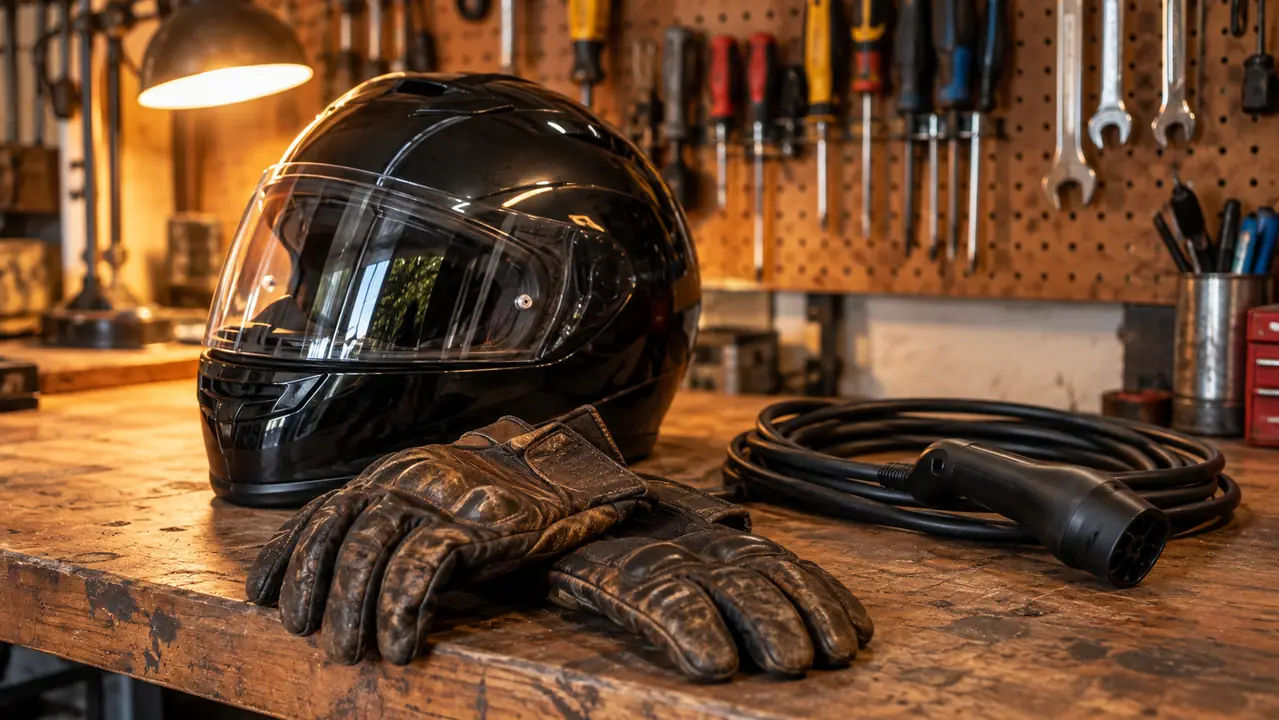
The routine matters more than the spec sheet, so here is mine. The helmet hangs on a rack on the garage wall, and the headset gets plugged in on the bench the night before a ride. I pair once, at home, and after that it comes up when I turn it on. The night before a longer trip I open the Cardo Connect app and let it check for updates, which takes a few minutes and has never caused a problem. That is the whole maintenance schedule.
Donna rides pillion maybe six times a season and does not have a unit of her own. That is a limit worth saying out loud. A headset in one helmet is a phone and music device, not a conversation with your passenger, and no amount of pairing will change the fact that she has nothing to pair to.
The G2P fit into the same routine with less ceremony and fewer options. It turned on, it connected, it played. I suspect a lot of riders would be perfectly happy with that for years and never miss the app, the updates, or the cross brand pairing. I am not one of them, but from where I sit the case for it is easy to see and I am not going to pretend otherwise.
Who Should Buy Which
Buy the Cardo Spirit if you ride with other people, if you keep gear for years, or if you want one unit that will pair with whatever shows up next to you at a fuel stop. The cross brand pairing and the over the air updates are the two things that separate it, and both pay off after the first month rather than on the first day. It is also the better pick if you want a warranty you can point at, since the listing carries 2 years from the manufacturer.
Buy the LEXIN G2P if your phone lives in a pocket and you want it to stay there. If your riding is music on a Saturday morning and a call when you are running late, the buttons on the unit will do everything you need and you will never think about firmware. If you are outfitting two helmets, look at how the kit is packaged before you decide rather than assuming, and read the current warranty terms yourself. Either way, check your helmet for speaker pockets first. That is the decision that actually determines whether you end up happy.
One Unit, One Helmet, One Less Thing to Think About on the Road
The Spirit is the headset I stopped noticing, which is the highest thing I can say about any piece of gear. Bluetooth pairing across brands, updates over the air, 150 grams, and 2 years of manufacturer coverage.
Amazon Check Today's Price on Amazon →