
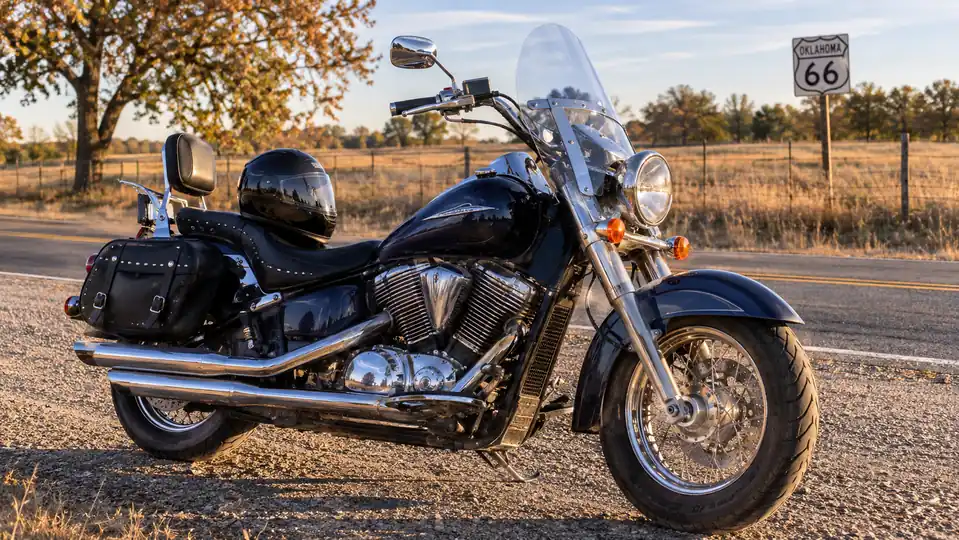
The boots I wore for the first fifteen years of riding were work boots. Heavy leather, a lug sole built for a ladder, a shank stiff enough that I could feel the shifter through it. They were fine. Fine is the word you use about a boot right up until the afternoon your right foot comes down on loose gravel at a stop and the sole slides out from under you. That happened to me on a county road years ago. I walked away with a scraped jacket and a sore wrist, and I spent the next few weeks thinking hard about what a work boot is actually designed to do, which is not stand on a motorcycle peg or find traction on gravel.
So when I went looking for a boot built for the bike instead of the jobsite, the Harley-Davidson Brake Buckle boot was one of the first pairs I pulled on. I have now worn them for a full year, most weekends, somewhere around four thousand miles of two-lane Oklahoma roads. I have a clear picture of what they do well and the two or three things they will not do for you at all.
The Quick Verdict
A real leather riding boot that breaks in fast, holds the ankle, and disappears on your foot by the second weekend. Buy it for the fit and the coverage. Do not buy it for rain.
Amazon Check Today's Price →The boot that lives by my garage door from April to October
Pull-on leather, ankle coverage, a rubber sole that grips a wet gas station pad. Check the current price and the size run before your next Saturday.
Amazon Check Today's Price on Amazon →How I've Used It
My riding is weekend riding. I work weekdays as a maintenance supervisor, and Saturday is the day the bike comes off the kickstand. Most trips run 100 to 250 miles, usually east toward Grand Lake or south along Route 66 where the road straightens out and the towns get small enough that nobody minds a motorcycle parked in front of the diner. Donna rides pillion on maybe one trip in four. The rest of the time it is me, a thermos, and a route I change my mind about somewhere around mile sixty.
That pattern matters, because it defines what this review can and cannot tell you. I have not commuted in these boots five days a week. I have not taken them on a thousand-mile tour. What I have done is put them on and taken them off about a hundred and fifty times, walked around gas stations and diners and a gravel lot at a lake marina, stood in them in July heat, gotten them good and soaked in a spring storm, and ridden home. That is the honest scope of it.
The first two weeks were the worst of it, and even then it was not bad. Ankle-height leather with no lining takes a little time to fold where your ankle actually bends instead of where the boot wants to. I wore them around the garage and to the hardware store for a few days before I trusted them on a long ride. By the second weekend I had stopped noticing them, which is the highest compliment I can pay a piece of gear. No blisters, no hot spots. Just a stiff boot that turned into a comfortable one.
What the Harley-Davidson Brake Buckle Boot Actually Is
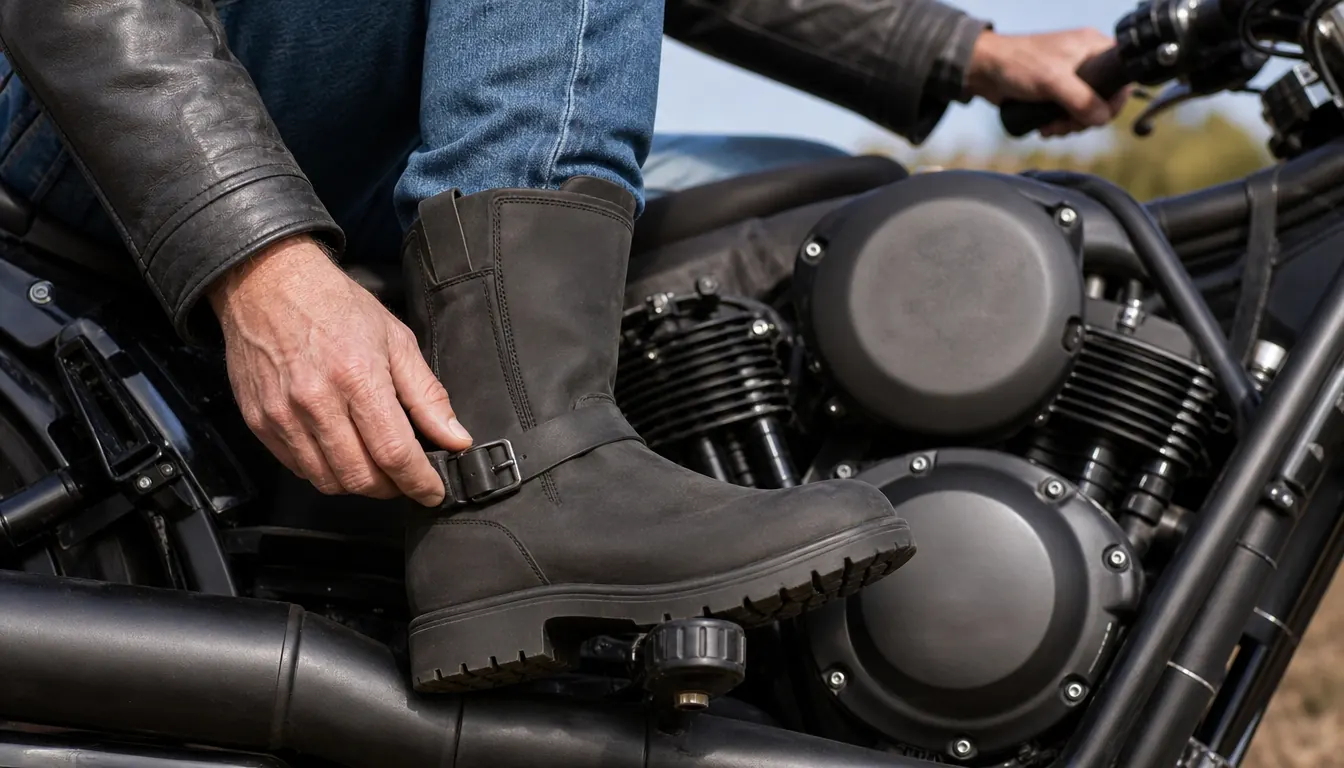
Set the name aside and here is the boot. Full leather upper, round toe, low heel, rubber sole. The closure is pull-on, no laces, and the shaft comes up over the ankle. The listing puts the shaft circumference at 8 inches, the item weight at 4 pounds, and describes the lining as unlined. The style number is D91684. The buckle and the logo are the two pieces of decoration, and the listing classifies the boot as a summer season, casual occasion boot.
That last line is worth a pause, because it tells you more than the marketing copy does. Harley-Davidson built this as a casual riding boot and lists it for summer. In practice that means two things. It means the leather is not so heavily built up that your feet cook in July, which is the main reason I can wear these from April through October in Oklahoma. It also means the boot is not built to keep water out. The listing is blunt about that too, and I will get to it.
The unlined construction deserves credit rather than complaint. An unlined leather boot molds to your foot instead of fighting it. There is no membrane to stiffen up over a season, no synthetic layer that rubs one spot raw after the stitching softens. What you give up is weather protection. What you get back is a boot that ends up shaped like your foot rather than shaped like a last in a factory.
A hundred and fifty on-and-off cycles later, the leather folds exactly where my ankle bends. Nothing else on the boot has moved.
The Pull-On Fit, the Buckle, and That 8-Inch Shaft
I was skeptical about pull-on. Laces let you tune the instep and the ankle separately, and a boot that just slides on either fits or it does not. What won me over is that 8-inch shaft measurement. It is snug enough that the boot does not wallow around your foot while you are working the shifter and the rear brake, which is the failure mode I expected and did not get. It goes on with a firm push and a pull at the back, and it comes off with a bit more effort than it went on. For a riding boot, difficult to remove is the correct direction.
The buckle on the outside of the ankle does a job beyond decoration. It lets you draw the shaft in a notch tighter, which helps if you are between sizes or if you wear a heavier sock in cooler weather. I set mine in the middle position around the third week and have not touched it since. It has not bent, has not lost its finish, and has never caught on a peg or the case guard when I set my foot down. On a boot with this much else going on, a buckle that quietly does its job is a good buckle.
One practical note for anyone new to pull-on boots on a motorcycle. Check the fit with your riding pants on, not with your jeans cuffed up in the shop. A pant leg that bunches at the top of the shaft can push the boot down at the heel while you ride. I found that out on the first long day and solved it by letting the cuff fall outside the boot. That is how I wear them now and the heel has stayed put ever since.
Heat, Rain, and the Places These Boots Say No
July in Oklahoma is its own kind of test. I rode a 180-mile loop around Grand Lake last August with the temperature at 97 and a wind that was doing nothing helpful. My feet were warm. They were not cooked. The unlined leather breathes better than anything with a waterproof membrane in it, and I never got that swampy feeling that shows up around hour three in a sealed boot. That is a real advantage, and it is the reason these became my summer boots without me planning it.
Rain is the other side of that trade, and I want to be plain about it. Not water resistant means not water resistant. I got caught in a spring storm coming back from Tenkiller, the kind that goes from sprinkles to a wall of water in about ninety seconds. Within ten minutes my socks were wet. The boot itself came through fine. The leather did not stain or stiffen when it dried, the sole stayed glued, and I finished the ride without any trouble. But if you ride in wet weather more than a few times a season, this is not the boot, and no amount of conditioner changes that.
Cold works the same way. The listing says summer and it means it. I have worn these down into the low fifties and been perfectly fine with a heavier sock. Below that the leather firms up and the lack of lining stops being a virtue. My cold-weather riding uses a different boot. That is not a knock on this one. It is a boot doing exactly what it was built to do, and the rider's job is to know which tool is in his hand.
What I Liked
- Unlined leather breaks in within two weekends and molds to the ankle
- 8-inch shaft stays snug on the foot while you work the shifter and brake
- Rubber sole grips wet concrete and gravel without a lug pattern that packs up
- Runs cool in summer heat because there is no membrane trapping moisture
- Adjustable ankle buckle lets you tune the shaft without laces
- Stitching, sole, and buckle all came through a year of weekend miles intact
Where It Falls Short
- Listing says not water resistant, and it is not. Ten minutes of real rain and your socks are done
- Thin factory insole compressed under the ball of the foot within a year
- Pull-on construction leaves no way to tune the fit if your foot lands between sizes
- Summer boot only. Below about fifty degrees the leather stiffens up
How They've Held Up Over a Year
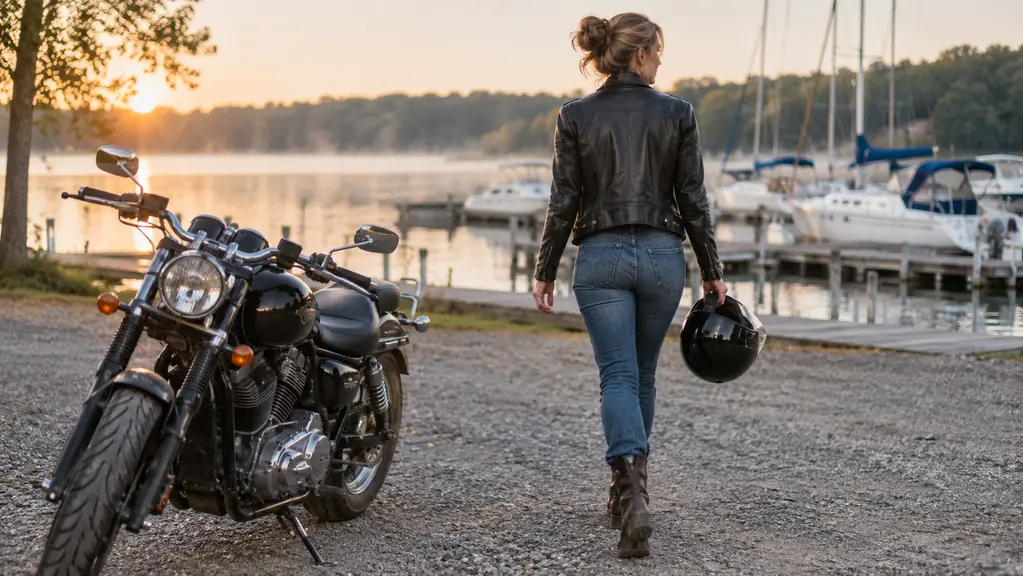
The sole takes the most abuse and shows the least wear. After a year of marina gravel, gas station pavement, and more walking around small towns than I expected, the tread is worn at the ball of the foot and nowhere else. It still grips a wet concrete pad. The heel has not rolled over to one side, which is what usually happens first on a boot I walk in. I have not had to resole them and at this pace I do not expect to for another year or two.
The leather has aged the way good leather does. It has softened across the instep, molded around the heel, and picked up a scuff on the left toe from a dropped folding chair at a campground. None of that reads as damage. It reads as a boot that gets worn. The stitching at the shaft and around the buckle has held without a single pulled thread, and the buckle hardware has kept its shape through a hundred and fifty on-and-off cycles, which is more than I can say for a pair of work boots that cost me more.
The one item on my watch list is the insole. The boot comes with a thin one, and after a year of weekend miles it has compressed under the ball of my foot. I am not uncomfortable yet, but when I do replace it I will put in something slightly thicker and get another couple of years out of the same pair. That is a five-minute fix at a shoe bench, not a reason to pass on the boot. I mention it because nobody told me, and I would rather you hear it from a rider than find out on your own.
Who This Is For
This Harley-Davidson boot is for the rider who does most of their miles in warm weather and wants a leather boot that still looks like a boot when they get off the bike. If your Saturdays look like mine, 100 to 250 miles of two-lane with stops for gas and pie, these will handle everything you ask of them. They suit a cruiser, they suit a pull-on habit, and they suit a rider who would rather have ankle coverage and a real sole under him than a sneaker with a motorcycle logo stitched on the side.
They are also a solid first riding boot for somebody moving up from street shoes. The round toe slides under a shifter without hunting for the lever. The low heel sits flat on a peg instead of rocking on it. And the leather is thick enough that you feel the bike through the boot rather than through a thin canvas upper. When you are still learning where everything is, that feedback matters more than any feature on a spec sheet.
Who Should Skip It
If you ride in the rain, skip it. If you ride through a real winter, skip it. If what you actually want is a waterproof boot with a membrane and a deep lug for gravel roads and two-tracks, this is the wrong tool and you already know it. Buy the boot that matches the riding you do most, not the riding you daydream about in February.
And if you need a wide width or an exact half size with laces to tune the fit, pull-on construction is going to be a gamble. Mine fit true to my normal size from the first try, but that is one foot and one pair, and I would not build a rule out of it. Order with the return window in mind and try them on with your riding pants before you commit.
One year in, the only thing I'd change is the insole
Leather that broke in by the second weekend, a sole that still grips after four thousand miles, and a buckle that never once got in the way. Check your size and today's price.
Amazon Check Today's Price on Amazon →