

I bought my first full face helmet straight off a shelf because the box said large and I had worn large in everything since high school. It fit like a bucket in a crosswind. I spent a whole Saturday on Route 66 with my forehead mashed into the liner and my cheeks loose enough to chew, and I could not figure out why other riders talked about helmets like they were comfortable. The size was wrong. Not dangerously wrong, just wrong enough that I rode distracted, and a distracted rider is the exact problem the gear is supposed to solve.
So when I sized the ILM-313, I did it the slow way. Tape measure, size chart, twenty minutes on the couch, then a short loop around the neighborhood before I trusted it on a real ride. That sequence is the whole article. I ride a mid-size cruiser on Oklahoma back roads most weekends, somewhere between 100 and 250 miles at a stretch, and I have been at it about twenty years. I am not a racer and I will not pretend gear makes a crash survivable. It buys margin. A helmet that does not fit right spends that margin before you ever need it. Here is how I pick a size now, with ILM as the example because it is the one hanging in my garage.
Measure your head once, then let the chart do the work
The ILM-313 meets DOT standards, ships with a clear visor and a smoked visor, and includes a neck scarf and a helmet bag. Check the size options before you order.
Amazon See sizing and availability on Amazon →Step 1: Measure Your Head, Not Your Hat Size
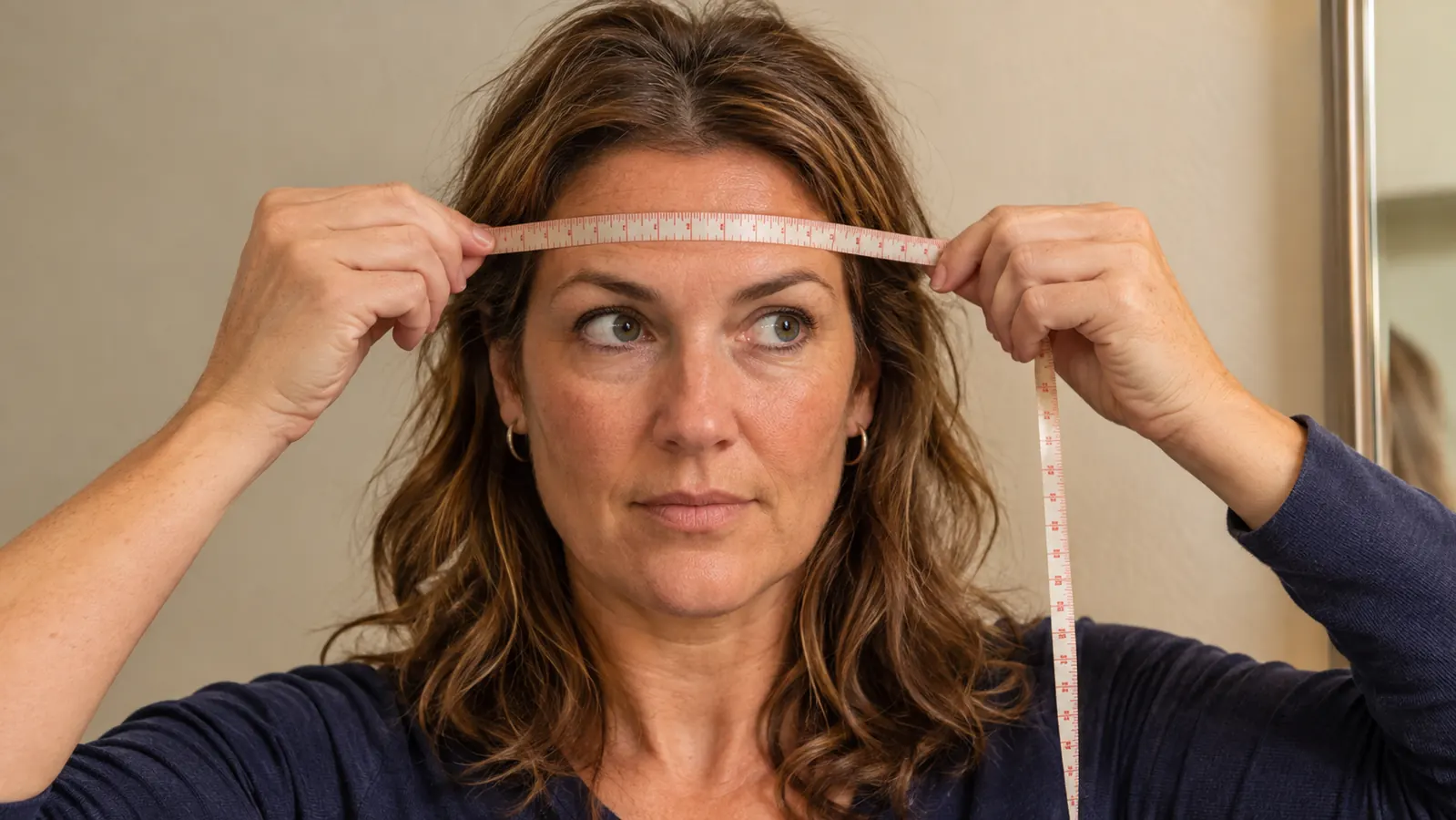
You need a soft tape measure and a mirror. No soft tape? A piece of string and a ruler do the same job. Wrap the tape around your head about an inch above your eyebrows, keep it level the whole way around, and take the widest number. Do it three times and write down the largest one. Hair, a crooked wrap, and a tape held loose will all hand you a number the helmet disagrees with.
Two mistakes show up every time. People measure at the forehead like they are fitting a ball cap, and a helmet sits lower than a cap does. People also pull the tape tight because a smaller number feels better. Do not do that. The measurement is not a grade you are trying to pass. It is a starting point, and a tight tape gives you a starting point that is already wrong.
While the tape is out, look at the shape of your head, not only the size. Stand square to the mirror. Some heads are round, some run noticeably longer front to back, and some are wide at the temples. A helmet is built around a shell shape as much as around a number, and the ILM-313 is built on a streamlined aerodynamic shell. Your measurement gets you to the right row on the chart. Your head shape tells you what to expect at the temples and the cheeks once you are in it.
Step 2: Match Your Number to the ILM Chart, Then Ignore the Letter
Take that number to the size chart on the ILM listing and use their chart only. Not a chart from a different maker, and not the chart from the helmet you bought in 2009. Sizing runs different between companies. A large from one brand and a large from another can sit most of an inch apart, and neither one is lying to you.
The letter on the box is a label. It is not a fact about your head. I have been a large in one helmet and an extra large in another inside the same month, and both fit. What matters is the range that lines up with your measurement. If you land at the top of one range and the bottom of the next, order the larger of the two and plan to tighten the fit with padding. The ILM-313 has removable inner lining pads, and the listing notes a five year manufacturer warranty along with a liner swap for a better fit.
One more thing about that chart. Read the entries on either side of your number instead of just the one you land on. That tells you how steep the jump is between sizes. When the ranges are narrow, half an inch can move you a full size, and that is worth knowing before you order rather than after the box is open on the garage floor.
Step 3: Check the Three Fit Points Before You Trust the Number
A helmet is the right size when three places feel right. Your forehead should touch the liner evenly, with no single hot spot. Your cheeks should be pushed in enough that you look faintly ridiculous when you bite down. The back of your skull should be held firmly enough that pushing up on the chin bar does not roll the shell forward over your eyes.
The forehead is where most people get it wrong. A shell that is rounder than your head puts all its pressure into one band across the front, and after forty minutes that band is the only thing you can think about. If you feel it in the first minute in the garage, the shape is fighting you and no amount of break-in will fix it. Different size, different model, or a different brand, but not a different attitude.
Cheek pads work the other way around. They feel too tight on day one and right after a few weeks, because foam compresses with use. Judge the cheeks knowing that. Judge the forehead exactly as it feels right now. The ILM-313 uses removable inner lining pads, so a liner change can pull a fit back in later if the cheeks go soft before the shell does. That is a smaller job than a new helmet and it keeps a shell you already trust.
Step 4: Learn the Strap and Know What Comes in the Box
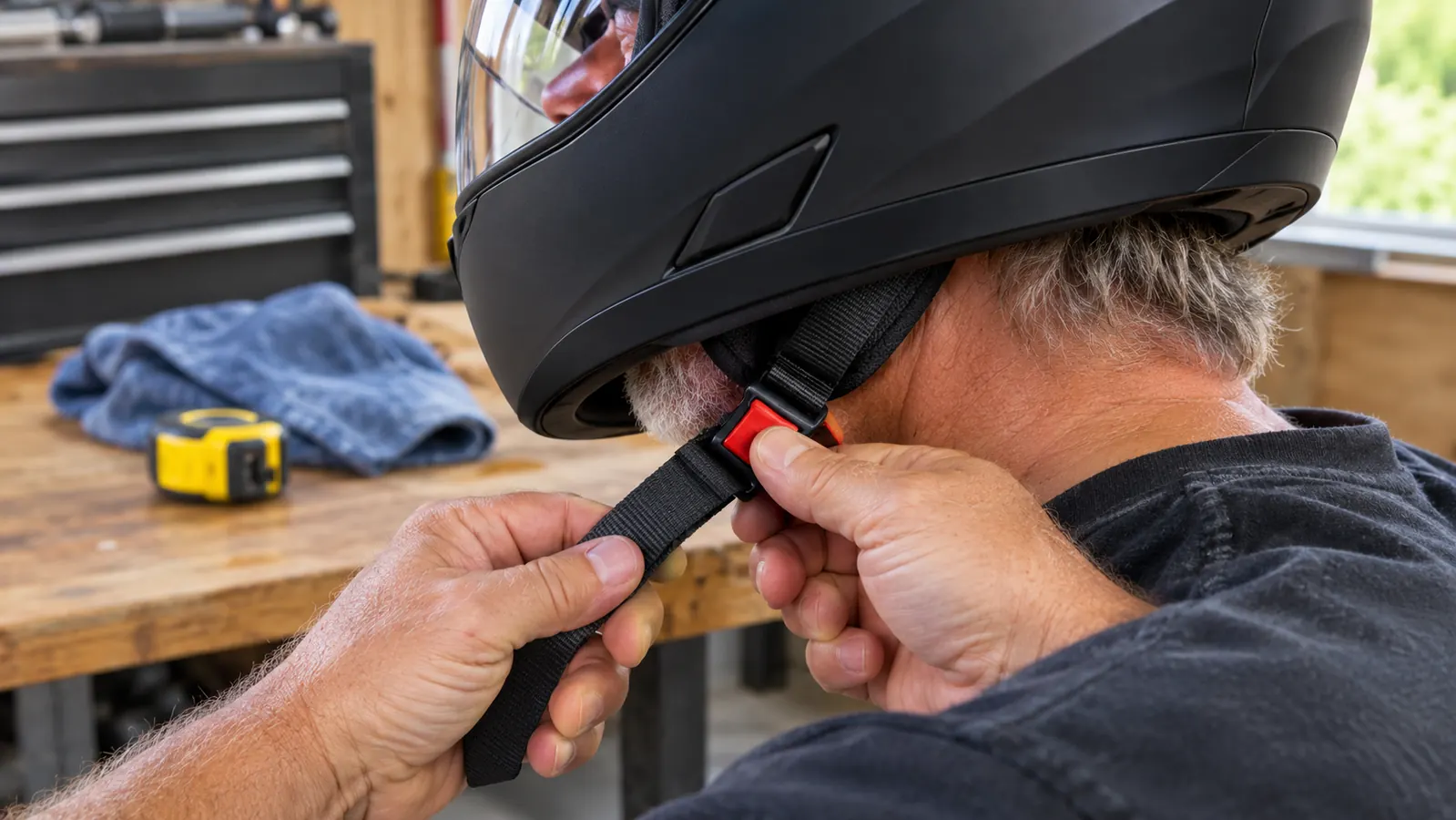
A correct size does nothing if the helmet is not fastened the same way every single time. The ILM-313 closes with a quick release clasp and strap. That is a two hand habit for me: strap through, clasp seated, then a tug on the strap to confirm it caught. Same order every ride. I check it again after the first stop, because a strap that felt fine in the garage can loosen once you are moving and shifting around in the seat.
Know what is in the box before the first ride, because it changes how you fit the helmet. The ILM-313 ships with the helmet, a clear visor and a smoked visor, a neck scarf, and a helmet bag. The neck scarf earns its place in Oklahoma. A spring morning out toward Grand Lake starts cold and finishes warm, and a scarf at the neck keeps the chill off without a layer you have to stop and peel. Fit the helmet with the scarf on if you plan to wear it, because a scarf changes how the chin strap sits against your jaw.
Then check what the helmet is actually rated for against how you ride. The ILM-313 meets or exceeds FMVSS-218 and DOT standards, and the listing covers cruiser and touring use along with a long list of other vehicle types. That is a street standard, cleared in writing. It tells you the helmet passed a defined test. It does not tell you that any particular get off is survivable, and no honest piece of gear will tell you that.
Step 5: Do a Twenty Minute Home Test Before Any Real Ride
Before the tags come off, wear the helmet in the house for twenty minutes. Sit down, stand up, look over both shoulders, tip your head back like you are checking traffic merging behind you. You are looking for pressure that builds instead of settling. Mild pressure that fades by minute ten is normal. A hot spot that gets sharper at minute fifteen is a return, not a break-in.
Then do the grab test with the strap fastened. Hold the helmet by the chin bar and try to roll it forward off your head, then backward. It should drag your scalp along with it and stop. If the shell slides while your skin stays put, it is too big, no matter what the tape measure told you. Run the same test with the neck scarf on if that is how you plan to ride most weekends.
Last step is a short loop close to home, at a quiet hour, on roads you already know. Ten minutes is plenty. You are not evaluating the helmet at that point, you are confirming that nothing you felt on the couch turns into a problem once there is wind and vibration. If the forehead aches or the visor sits wrong, you want to find that out while the return window is still open and not eighty miles from the truck. My neighbors have stopped asking what I am doing.
What Else Helps
Sizing is the part you control on day one. A few habits keep the fit honest after that. Keep the liner clean, because body oils and road dust change how a helmet sits over a season. Store it in the bag it arrived in, off the wall rack and out of the afternoon sun in the garage. Do not leave it sitting on the seat of the bike between stops, where it collects heat and takes a knock every time you walk past with an armful of something else.
Change the liner before you change the helmet when a fit goes loose and the shell is still sound. The ILM-313 has removable pads for that reason, and the listing mentions getting another liner for a better fit. New pads are a small job and they reset the cheeks and the forehead line without replacing a shell that has done nothing wrong.
If the shell slides while your skin stays put, it is too big, no matter what the tape measure told you.
And measure again the next time you buy, even if it is the same model. Heads do not change much, but hair, weight, and a new production batch move the number by enough to matter. The letter on the box is the least useful thing in this whole process. Nobody at a gas station in Stroud is checking whether you are a medium. What they see is whether you look comfortable, and comfortable is just a correct measurement you took twenty minutes to get right.
Get the size right once, then stop thinking about it
Measure, check the chart, wear it around the house for twenty minutes. The ILM-313 ships with clear and smoked visors, a neck scarf, and a helmet bag.
Amazon Check the ILM-313 on Amazon →