

The thing nobody tells you about buying a motorcycle helmet online is that the return shipping is what actually decides it. You read the reviews. You measure your head. You order. Then the box shows up, you pull the liner down over your ears, and you find out in about four seconds whether you got it right. I have done that dance more than once in twenty years of weekend riding out of Tulsa. The ILM-313 is the first full face helmet in a while that I kept past the return window without arguing with myself about it.
That is not the same as calling it perfect. It is not perfect. There are three things about the ILM-313 that I have decided to live with, and one of them will matter more to some riders than it does to me. What follows is the version I would give a friend in the garage: what the helmet does well, where it frustrates me, and who should spend their money somewhere else.
The Quick Verdict
A DOT certified full face that weighs three pounds, ships with a clear and a smoked visor, and fits like a real helmet once the liner settles. The cheek pads are the weak point and the visor swap is a bench job.
Amazon Check Today's Price →Measure first. The rest of this helmet is easy.
The size chart number is the whole decision with the ILM-313. Both visors, the neck scarf, and the bag come in the box.
Amazon See today's price on Amazon →The Part Nobody Warns You About
Every full face helmet review spends its words on the shell and the certification, and almost none of them spend any on the two minutes after you take the helmet out of the box. That window is where your opinion actually forms. The shell is the easy part. A molded ABS shell with a DOT sticker on the back either passes FMVSS-218 or it does not, and you are not going to learn anything useful about that in a parking lot.
The part that decides whether you keep wearing the thing is the liner, the strap, and the visor. Those are the three points where your body meets the helmet, and they are the three places where a cheap helmet gives itself away. On the ILM-313, two of those three are done well and one of them needed two weeks of patience. That is the whole review in one sentence, but the details are worth your time because they differ by rider.
I am not going to pretend certification means nothing. It means the helmet passed lab tests for impact and retention, and DOT and FMVSS-218 are a floor rather than a ceiling. Once you are above that floor, the differences between helmets are almost all about fit, noise, and how the thing behaves at a stoplight in July. So that is where I have aimed this.

How I've Used It
I ride weekends, mostly 100 to 250 mile days on two lane roads east of Tulsa. Route 66 when I want easy, the Grand Lake and Lake Tenkiller roads when I want curves, and a lot of flat Oklahoma highway in between. That is not track testing and I will not dress it up as such. Call it a thousand miles on this helmet since spring: heat, a spring storm that came out of nowhere the way they do here, and one 45 degree morning that made me glad for the neck scarf in the box.
The bike is a mid size cruiser I have had for six years. No fairing to speak of, which matters, because a full face helmet behind a tall windshield is a different experience than the same helmet in clean air. Everything I say about wind and noise comes from clean air at highway speed. Behind a proper fairing your results will be better, and I envy you.
The helmet has been on and off a few hundred times. Errands to the shop on nice days, a quick run for groceries, the long Sunday loops. I have swapped visors twice, washed the liner pads four times, and dropped the helmet once off the seat onto the garage floor, which is the only impact test I ever want to run.
What I Actually Like
The weight is the first thing. Three pounds, per the spec sheet, and it feels like three pounds. My neck is not what it was at thirty, and a heavy helmet shows up around mile 120 as a dull ache at the base of the skull. The ILM-313 does not do that to me. It is not a featherweight, but it is light enough that I stop noticing it, which is the only thing I actually want from a helmet.
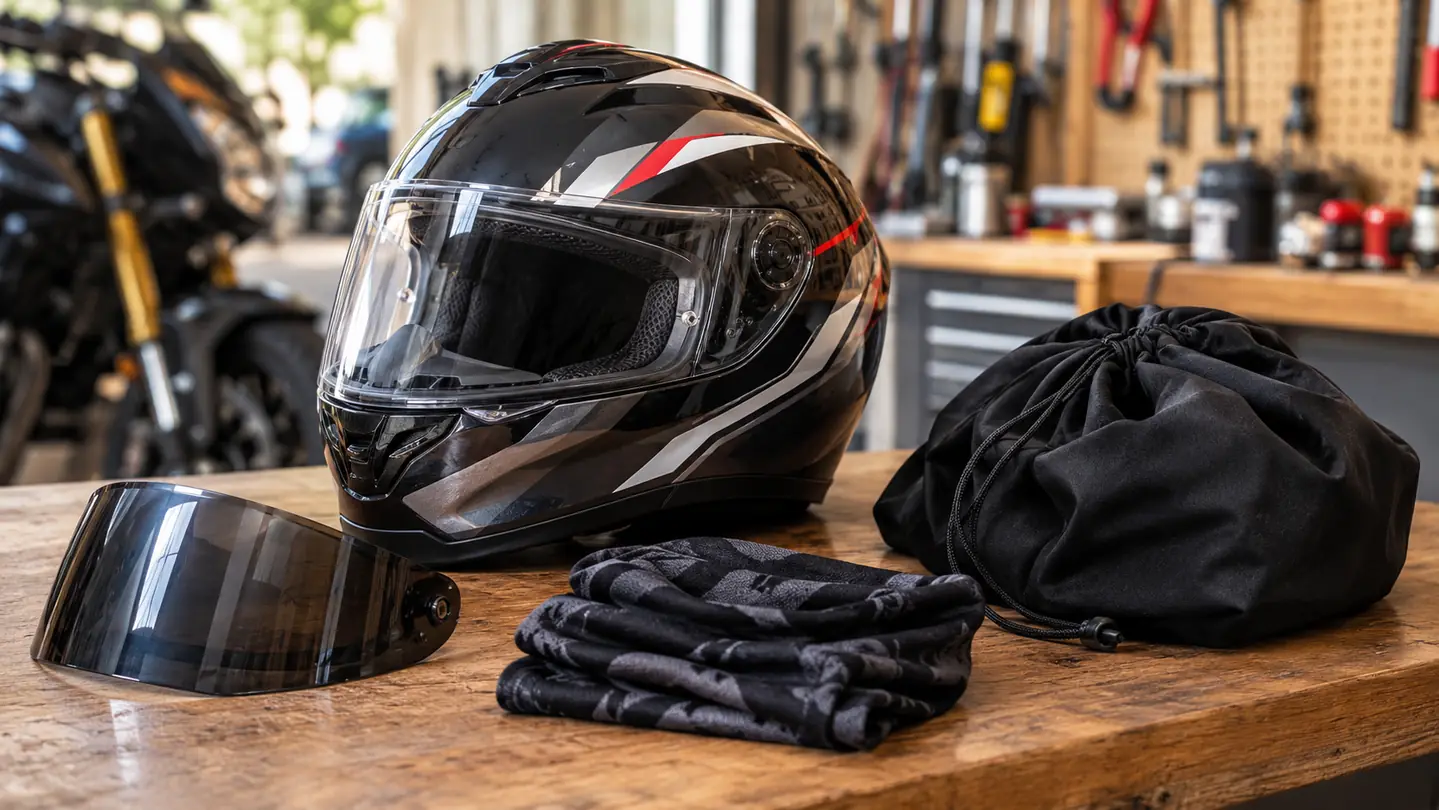
Second, the visors. A clear one and a smoked one both come in the box, along with a bag for the spare, and that saved me from buying a tinted shield as an extra. I run clear for overcast mornings and smoked for the ride home into a low sun, which in Oklahoma in summer is a genuine problem at seven in the evening. Swapping them is a bench job with both hands, not something I would do at a gas pump, and I have never once needed to do it at a gas pump.
Third, the quick release clasp. It took two rides to stop fumbling it and now I can fasten it with summer gloves on without looking down. That sounds like a small thing until you have stood in a parking lot fighting a D ring with cold fingers in March. The loose strap tail does flap, which I will get to, but the clasp itself is good.
Fourth, and this surprised me, the neck scarf. It shipped in the box and I assumed it was filler. It is not. On that 45 degree morning, with the scarf tucked up under the chin bar, the ride was noticeably warmer than the same route would have been without it. It lives in the helmet bag now and comes out every cold start.
Fifth, the shell feels like a helmet. I know that is not a technical measurement. Press on the side of an inexpensive full face and you can sometimes feel it give. This one does not give. The finish has held up through a season of bug splatter and hose downs with no dulling that I can see, and the bag means the helmet lives on a garage shelf instead of a hook where it collects dust.
Three pounds, two visors in the box, and a clasp I could work with gloves on by the second ride.
What Bugs Me
The liner is the weak point. The pads are removable, which is the right call, and they wash up fine in a sink with mild soap and air dry overnight. But the cheek pads out of the box are firm, and for the first two weeks the helmet squeezed my face hard enough that I was pulling it off at every stop. It broke in. By week three it was fine, and now it is genuinely comfortable. Two weeks of tight, though, is a real cost, and if you are between sizes this is the helmet that will make you notice it.
ILM will send another set of liners to fine tune the fit, according to the warranty notes, and I know at least one rider who went that route. I did not need to. I bring it up because it is the fix for the one real complaint I have, and it is worth asking about directly rather than deciding the helmet is too tight and sending it back.
The strap tail flaps. The clasp works well, but the loose end has nowhere tidy to live, and above about fifty it starts tapping the side of the shell. I tuck mine up under the chin bar. Small annoyance, easy fix, still annoying.
The visor swap needs a flat surface and both hands. You are not doing it on the shoulder of the road. The mechanism is fine once you learn the trick, which is to seat the leading edge first and then press the trailing edge home, but the first time I tried it I was convinced I would crack something. If changing tints mid ride is part of your routine, this is not that helmet.
It fogs at the bottom edge. Cool damp morning, stopped at a light, visor down, and there it is. It clears the second you are moving again. I have not met a full face helmet that does none of this, so I will not pretend this one is the worst offender, but if you ride in cold and damp a lot you should plan for it rather than be surprised by it.
The bag is thin. It is a drawstring sack and it does the job of keeping dust off the helmet on a garage shelf, but it is not a padded case and it will not protect anything in a saddlebag. That is a minor complaint about a free accessory, so take it as the small gripe it is.
What I Liked
- Three pounds on the spec sheet and it feels like it on mile 200
- Clear and smoked visors both in the box, with a bag for the spare
- Quick release clasp I can work with summer gloves on
- Removable liner pads that wash in a sink and air dry overnight
- Neck scarf earned its place on a 45 degree morning
- DOT and FMVSS-218 certified ABS shell
- Five year manufacturer warranty with parts available
Where It Falls Short
- Cheek pads are firm for the first two weeks
- Strap tail flaps above highway speed
- Visor swap needs a bench and both hands
- Fogs at the bottom edge on cool damp mornings at a stop
- Wind noise above fifty five needs earplugs
- Helmet bag is a thin drawstring sack
Fit, Sizing, and the Measurement That Actually Matters
Measure your head, do not guess. A cloth tape around the widest part, roughly an inch above the eyebrows, level all the way around. The size chart on the listing is the number that matters, not your hat size and not what you wore in the service. I ordered off my measurement and the shell was right, which is more than I can say for the last helmet I bought on a hunch.
There is a difference between tight and wrong. Pressure on the cheeks will soften as the pads pack down, and that is the normal break in. Pressure across the forehead or a hot spot on the crown will not soften, and it will give you a headache by mile forty. If the ILM-313 feels snug in the face but clear at the top, give it a couple of weeks. If it presses at the top of your head, try the liner swap or send it back.
Check the chin bar clearance with the strap fastened. You want the helmet to stay put when you push up on the front of the chin bar, and you want to be able to open your mouth without biting your cheeks. The quick release clasp makes this easy to test in the house before you ever ride in it, which is exactly where you should be doing this testing.
Weight, Noise, and Heat in an Oklahoma Summer
July here is 95 degrees with a wind that feels like a hair dryer, and no helmet is comfortable in that. What I can tell you is that the ILM-313 is light enough that the heat is the only thing bothering me, instead of heat plus a sore neck. At a long stoplight I flip the visor up and let the air in. That is as much as any full face helmet is going to give you.
Noise is the tradeoff I would flag hardest. The shell is shaped to cut drag, and it does, because my head does not get yanked around in crosswinds the way it did with the cheap open face I used for years. But wind noise above fifty five is real and it is constant. I wear foam earplugs on any ride over an hour, and I would wear them with any full face helmet, so this is not a knock so much as a heads up.
The liner does get damp on a hot day, as liners do, and being able to pull the pads out and wash them is worth more in August than it sounds in February. Mine get washed every couple of weeks. The helmet does not hold a smell the way a fixed liner does, which is a small thing that adds up over a riding season.
The Wear Parts and the Warranty
Helmets wear out at the liner and the visor, not at the shell. The pads pack down, the visor picks up scratches, and somewhere around the third or fourth season the thing stops fitting the way it did on day one. What matters then is whether you can get parts. The ILM-313 carries a five year manufacturer warranty and replacement parts are available, which is more than you get from a lot of helmets in this part of the market. I have not had to use it, so I cannot tell you how the claim process goes, only that the terms exist and the liners are orderable.
The visors are the part I expect to replace first. A tinted visor that lives in a bag and gets swapped twice a season will pick up fine scratches from handling no matter how careful you are, and a scratched visor at sunset is worse than no tint at all. Knowing a replacement is a phone call rather than a new helmet is the reason I stopped worrying about it.
Who This Is For
This is for the rider who wants one full face helmet that covers most of the year, does not weigh on the neck, and ships with the two visors they would otherwise buy separately. Weekend riders, commuters on decent days, anyone who rides a cruiser without a fairing and wants something more than a half helmet without going to a race shop. If you are new to full face helmets and you are not sure the extra coverage is worth the hassle, this is a low risk way to find out.
Who Should Skip It
Skip it if you change tinted visors mid ride, because you will hate the swap. Skip it if you want a quiet helmet, because this is not one and earplugs are the answer. Skip it if you have a head shape that puts pressure on the crown, since no amount of break in fixes that. And skip it if you are shopping for a track day helmet, because that is a different certification and a different job entirely.
A full face helmet I stopped shopping around after
Three pounds, two visors, and a liner that broke in the way it should. Check the size chart, then check the listing.
Amazon Check the ILM-313 on Amazon →