
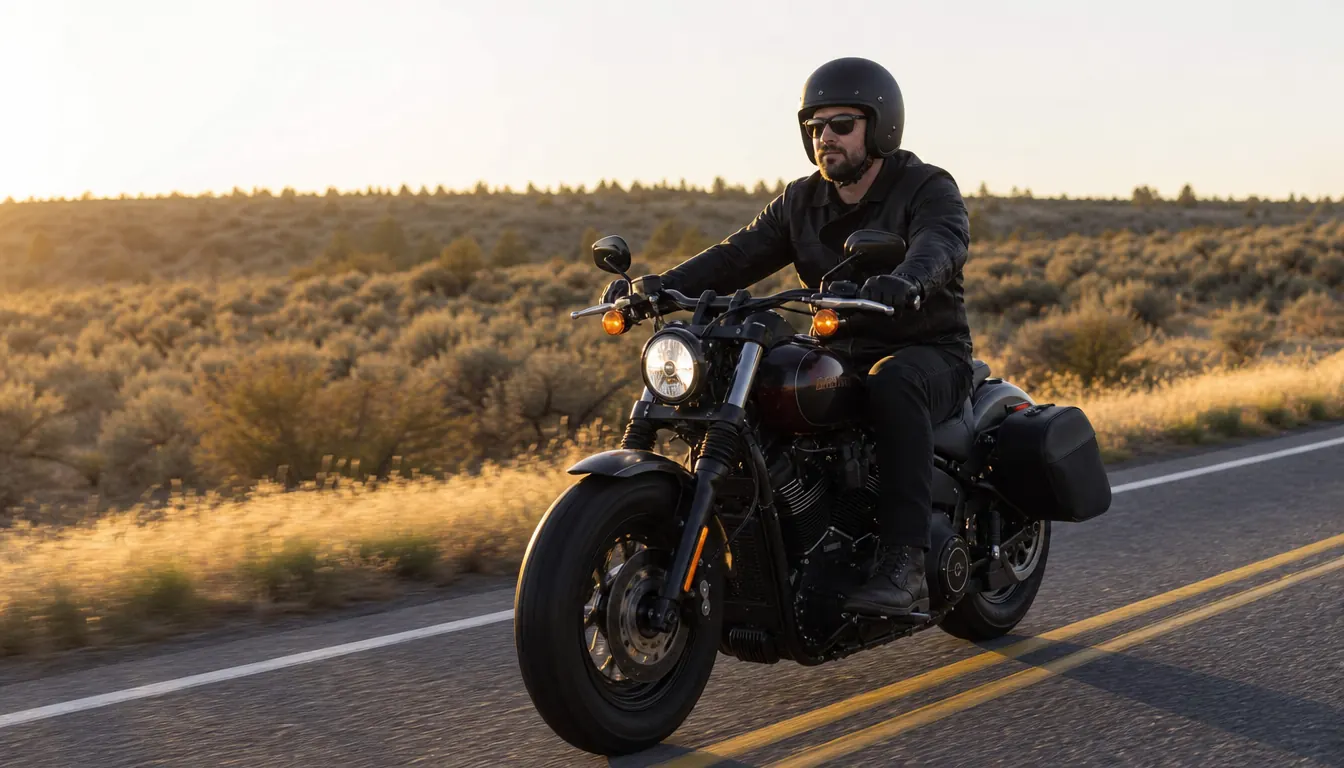
My hands used to call the ride before my back did. Somewhere around mile 140 of a 180-mile Saturday loop out Route 66 toward Grand Lake, the base of my right thumb would go numb and my fingers would start to tingle, and I would spend the last hour shaking my hand out at every stop sign like a man swatting a fly. I am 51, I have been riding weekends for about 20 years, and I have owned my cruiser for six years. That numbness was never a mystery. It was bar vibration, plain and simple, and I ignored it for years because I thought it came with the territory. Then a pair of Milwaukee Leather gel palm cruising gloves went up on the wall rack in my garage and I stopped pretending.
Here is what I had already tried. Thicker foam grips, which helped a little and made the bars feel like I was holding a pool noodle. Padded cycling gloves, which are built for a different kind of vibration entirely. And bare hands, which is what I did for most of two decades because I figured gloves were for cold weather. The Milwaukee Leather pair is the first one I have worn where the padding sits exactly where the bars press and nowhere else. These are the ten things I noticed across a full spring and summer of weekend riding, 100 to 250 miles at a stretch, in Oklahoma heat and the occasional sudden storm.
The padding sits where the bars actually press
Gel palm, leather build, relaxed fit, adjustable wrist closure. The pair that lives on my wall rack now.
Amazon Check Today's Price on Amazon →The gel palm eats the buzz before it reaches your thumb
Vibration is what gets you, not the weight of the bars. On my cruiser the buzz shows up strongest between 55 and 70, which is exactly the range where most of a weekend ride lives. The gel pad under the palm sits between my hand and that buzz. Before, my right thumb went numb around mile 140 of a 180-mile day. On the same loop now, it does not go numb at all. The pad does not make the bike smoother. It just stops the bars from talking to my hands quite so loudly.
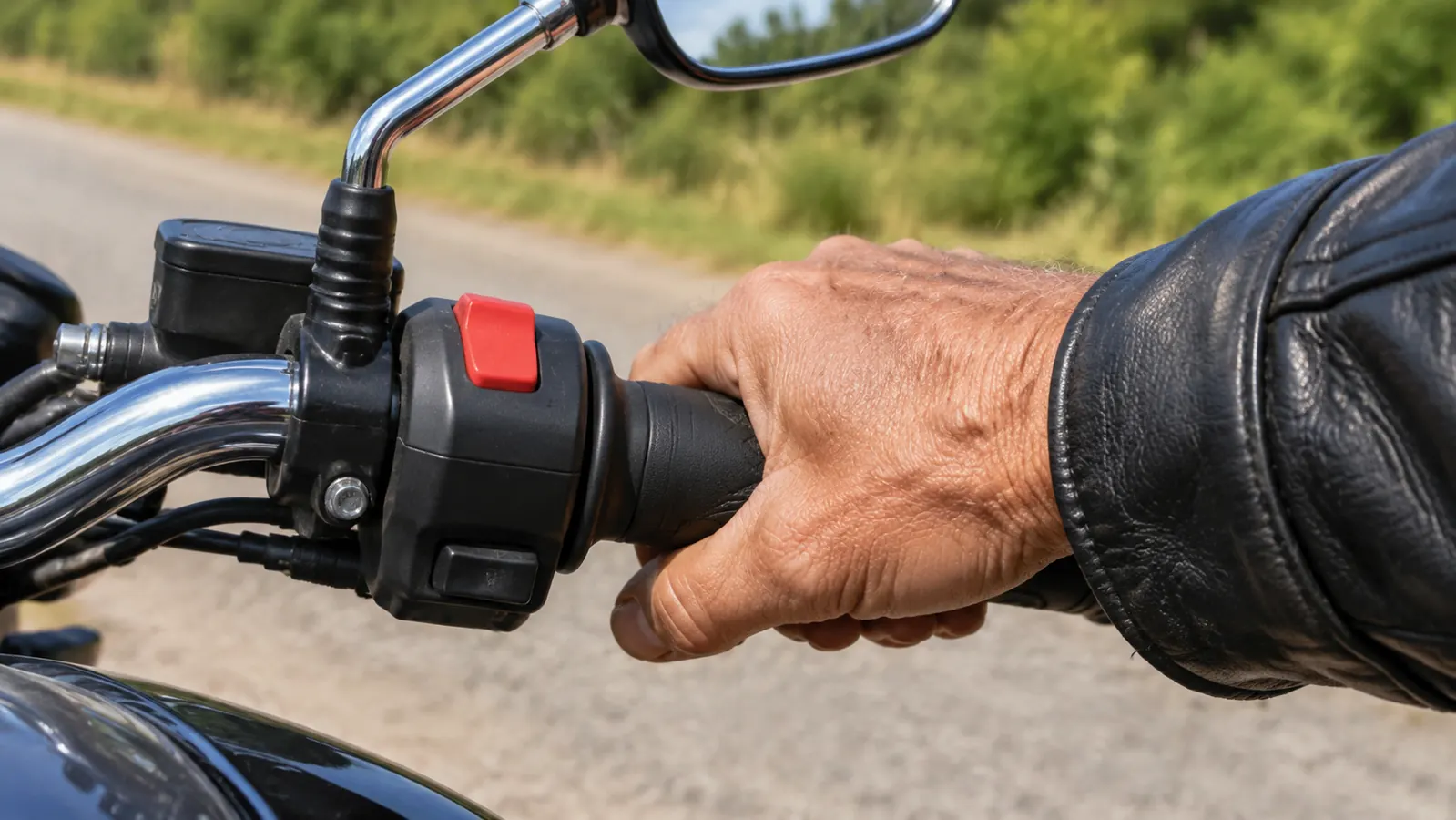
Leather holds the grip when your palms are damp
Oklahoma in July is not gentle. By the second hour my palms are wet and bare hands slide on the grip, which means I am squeezing harder to compensate, which means my forearms ache by the time I stop for gas. The Milwaukee Leather palm holds without me having to clamp down. I noticed it most on the lake roads around Grand Lake, where the turns come one after another and I am rolling on and off the throttle constantly for twenty miles.
A relaxed fit leaves room for hands that swell
My hands swell on a long day. That is not a complaint, it is just what happens after four hours of heat and vibration. A relaxed fit leaves room for that, so the gloves do not turn into a tourniquet by mid afternoon. Mine are a large and they fit like a large should, snug across the back of the hand with a little room through the fingers. If you are between sizes, stay where you are. Sizing up just moves the gel pad off the spot it is meant to cover.
The adjustable wrist closure sets once and stays put
The closure at the wrist is adjustable, hook and buckle, and it is the part I set on day one and then forget about. Loose enough that I can pull the glove off without undoing it, tight enough that it does not ride up when I reach for the turn signal. On a two-lane highway with a crosswind you do not want a glove shifting around on your hand. Mine stay where I put them, which sounds like a low bar until you have owned a pair that did not.
They earn their keep off the bike too
A glove that only works on the bike is a glove I leave at home. These get used at fuel stops, holding the pump nozzle, digging a card out of my wallet, and once to swap a taillight bulb in a parking lot outside Catoosa. They are also what I grab when I drive the truck on a cold morning. A full season of that kind of handling is a fair test, and the stitching has held through all of it without a loose thread.
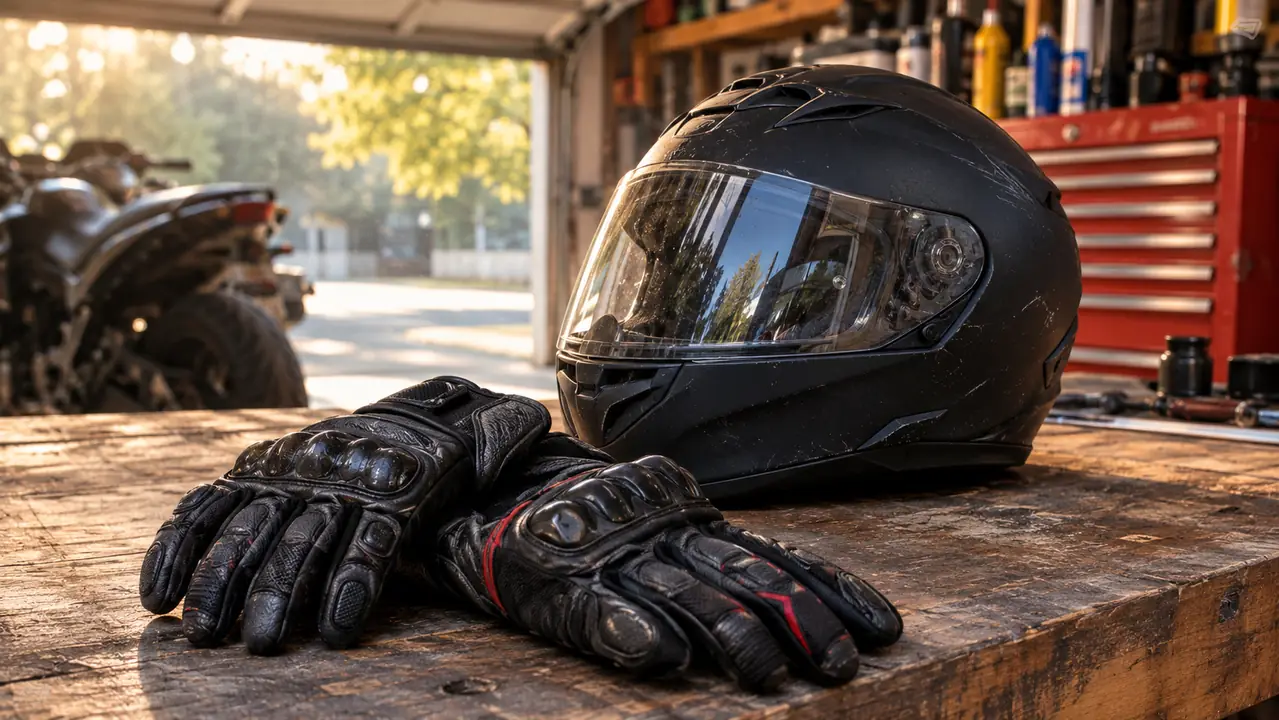
Ambidextrous means one worn palm is not a dead pair
The gloves are ambidextrous, which sounds like a small detail until the throttle hand wears out faster than the other one. It always does. With a pair like this I can swap them and get more miles out of the set before either glove is finished. I have not had to do it yet, and that is the point. It is a small piece of built-in margin on a piece of gear I plan to keep for years.
They soften into your hands instead of cracking
New leather is stiff. There is no way around it. The first two rides my hands felt every seam and I figured I had wasted my money. By the fourth ride they had softened into the shape of my hands and stayed there. That is what leather does when you treat it right. It does not split at the knuckle the way the synthetic pair I had before did after a single hot summer in the garage.
At 4.8 ounces you stop noticing them
The Milwaukee Leather listing puts the weight at 4.8 ounces, and that is about right in the hand. Light enough that I do not think about them once they are on, heavy enough that they cut the wind on a cool morning ride in March. I have worn gloves that felt like oven mitts and gloves that felt like nothing at all, and neither is what I want on a highway. These land in the middle. That middle is where a riding glove should be.
No bunching at the palm seam after a full season
Cheap gloves bunch at the palm seam, and the bunching turns into a hot spot right where the bar presses. The gel pad on these is stitched in and stays where it started. After a season of weekend miles there is no twist, no lump under the heel of my hand, no seam trying to migrate into the middle of my palm. I check them every couple of months and they still sit the way they did in April.
Hand wash, air dry, back on the rack
Care is hand wash only, and that is the entire routine. Lukewarm water, a little saddle soap, work it in, rinse, and hang them on the wall rack away from direct sun. They come back soft every time. I do it every few weeks through the summer and it takes ten minutes. That ten minutes is the reason the leather still moves with my hands instead of fighting them.
What I'd Skip
Here is what I would not bother with. Foam grip covers, which cost more than the help they give and make the bars feel vague in your hand. Fingerless gloves for highway miles, because the one time I tried them my fingertips were the first thing to go numb. Gloves with padding running across the whole palm and up into the fingers, which bunch up and fight the grip instead of helping it. And sizing up to get a looser feel, which just slides the gel pad off the spot where the bar pressure lands. None of that is a knock on the Milwaukee Leather pair. It is the list of what I tried before I got to them.
Two things I would change if I could. The gel pad holds heat, so in August your palms will run warmer than they would in a thin leather glove with no padding. And there is no knuckle armor here. That is not what this glove is built for and I am not going to pretend otherwise. This is a comfort glove for long miles, not a piece of impact protection. If you want armor, buy armor. If you want your hands to stop going numb on the ride home, this is the fix I found and it is the one I keep coming back to.
Mile 140 used to be where my right hand quit. On the last loop of the summer it never quit at all.
Long miles are easier when your hands are not the weak link
Leather build, gel palm, relaxed fit, adjustable wrist closure, ambidextrous. The pair I reach for every Saturday.
Amazon Check Today's Price on Amazon →