
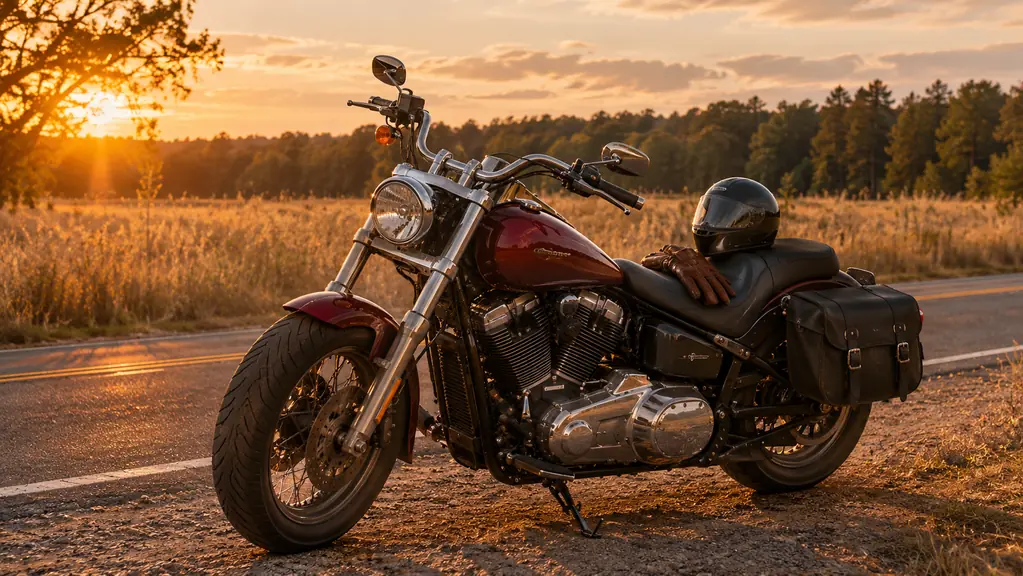
Short answer: for the riding I actually do, the Milwaukee Leather cruising gloves are the better glove, and on a long day it is not close. I have run a pair through most of a riding season out of Tulsa, weekend loops of 100 to 250 miles on Route 66 and the lake roads around Grand Lake and Tenkiller, and somewhere around mile forty I stop thinking about my hands completely. That is the whole test. The commuter gloves I swapped in for comparison never got there.
The two gloves are built for different rides, and that is most of the answer. A cruising glove is shaped around a relaxed grip and hours in the saddle. A commuter glove is shaped around a short ride, a lot of clutch work in traffic, and warm weather. If you ride twenty minutes to work and back, a commuter pair does the job. If your Saturday is 180 miles of two-lane with a lunch stop in the middle, the Milwaukee Leather pair is the one your hands will thank you for.
| Milwaukee Leather Cruising Gloves | Commuter Gloves | |
|---|---|---|
| Palm cushioning | Gel palm padding built in under the heel of the hand | Usually a thin leather or synthetic palm with no gel layer |
| Knuckle protection | Leather shell, no knuckle armor listed on the spec sheet | Molded knuckle guards are common on commuter pairs |
| Airflow | Solid leather, no mesh or perforation listed | Mesh panels and perforated fingers are common |
| Fit | Relaxed fit with an ambidextrous cut | Snugger sport cut, often shaped per hand |
| Wrist closure | Adjustable buckle and hook closure | Elastic or hook and loop cuffs that go on and off faster |
| Weight and bulk | 4.8 ounces, 12 by 6 by 2 inches packed according to the listing | Knuckle armor adds bulk across the back of the hand |
| Care | Hand wash only | Many commuting pairs can go in the machine on cold |
| Oklahoma August | Warm by nature, it is leather with nothing vented | Built for summer traffic with airflow in mind |
| Hour four in the saddle | Gel palm and a relaxed fit are made for exactly this | Firm performance feel that tires my hands after about two hours |
| Best for | Weekend cruisers logging 100 to 250 mile days | Short hops, traffic, hot weather, warm-weather commuting |
How I Compared Them
I did this the way I do everything, which is not scientific. Two pairs of gloves, one bike, one riding season, and a note on my phone at every fuel stop.
The Milwaukee Leather pair went on every weekend ride from April into September. Cool mornings, hot afternoons, one stretch of rain on the way back from Grand Lake that I did not plan for and would not repeat. The commuter pair went on weekday errands and a handful of shorter weekend loops, maybe 400 miles total.
What I watched for: how my hands felt at the end of the day, whether the palm padding stayed put or bunched up under my grip, whether I was fiddling with the closure at every stop, and whether I was thinking about the gloves at all. That last one matters more than anything on a spec sheet. Gear you notice is gear that is costing you attention you should be spending on the road.
The plan at the start of the season was simpler than what I ended up doing. I figured I would wear the Milwaukee Leather pair for everything, weekdays included, and find out whether a second pair was even worth owning. That lasted about two weeks. The first genuinely hot Tuesday in May, a 25 minute run to the hardware store and back, I got off the bike with damp palms and peeled the gloves off like a wet bandage. Nothing wrong with the glove. It was just the wrong tool for a short, hot errand, and that is the afternoon I started paying attention to the difference between the two rides instead of only the two gloves.
Where Milwaukee Leather Cruising Gloves Win
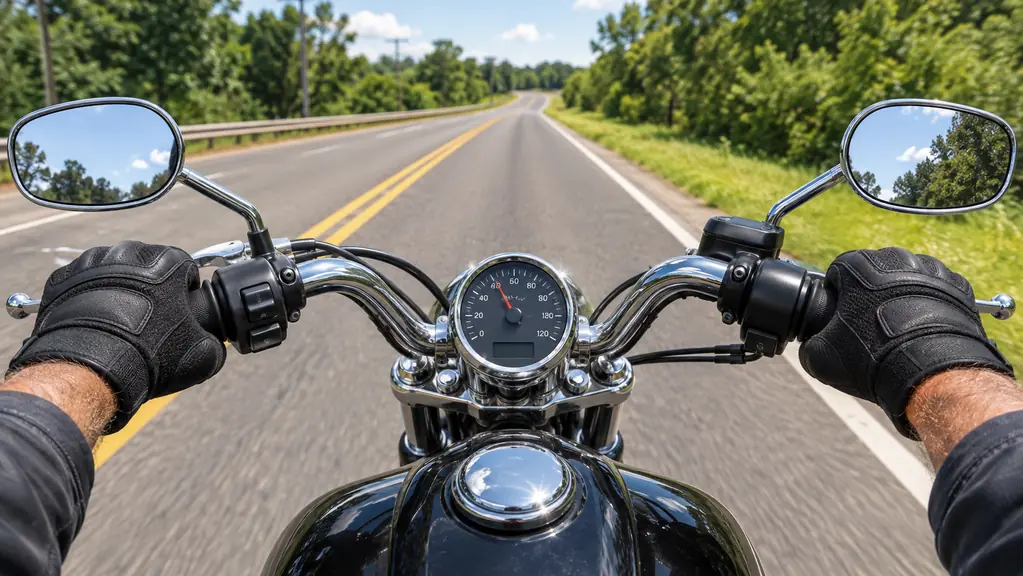
The gel palm is the reason. A cruiser puts steady pressure on the heel of your hand for hours, and that is exactly where a plain leather glove starts to feel like a piece of leather. With the gel layer there, my hands came off the bars at the end of a 200 mile day feeling like hands instead of claws. I never had to shift my grip to get comfortable, which sounds small until you realize how often you do it in a glove without padding.
One Saturday in June made the case better than any table could. East on Route 66 toward Chandler and on into Stroud, then south and back west through the lake roads, 214 miles on the odometer when I rolled into the garage. I stopped for fuel twice. Both times I pulled the gloves off to work the pump and put them back on without thinking about it, and both times my palms were dry where the gel sits and the leather was supple instead of stiff. My wrists were tired. My shoulders were tired. My hands were fine. On the pair I wore before these, that same day would have had me shaking my right hand out at every stop sign past mile 120.
The relaxed fit does the rest. These are not a glove that squeezes your hand into a shape it does not want to be in. There is room to close your hand around the throttle and the clutch without the leather pulling tight across the back of your knuckles. On a cruiser, where you are sitting up and holding a steady grip rather than moving around on a sport bike, that relaxed cut is the right call and it shows after the second hour.
The adjustable buckle and hook closure is the quiet third win. I set it once on the first ride and did not touch it again for months. That is not a feature you brag about, but it is a feature you notice by its absence when you are tugging at an elastic cuff at every fuel stop.
Where Commuter Gloves Win
I am not going to pretend the commuter glove is a bad glove. It does things this one does not. The molded knuckle guards are the obvious one, and if you ride daily in traffic where a mirror or a lane-splitting car is a real possibility, that hard shell across the back of your hand is worth having. The Milwaukee Leather cruising glove is leather and nothing else. That is a fair trade for a weekend rider and a poor one for somebody in rush hour five days a week.
Airflow is the other one, and in an Oklahoma August it is not a small thing. Commuter gloves are usually built with mesh panels or perforated fingers because the people buying them are sitting in traffic in the heat. Solid leather does not breathe the same way. Add faster cuffs, and often a fingertip that works on a phone screen, and the commuter pair is the more convenient glove for a short, hot, stop-and-go ride. If your ride is twenty minutes and ends at a parking lot, that convenience is the whole point.
The afternoon that sticks with me is a Thursday in July, 96 on the bank sign, four miles of stop and go on a road torn up for utility work. Twenty eight minutes to cover ground I usually do in nine. In a solid leather glove that stretch is genuinely unpleasant, you can feel the heat building across the back of your hand and the inside gets slick by the second red light. The commuter pair with mesh across the fingers was almost comfortable in the same traffic. In the same conditions on the same road, the cruising glove would have had me pulled into the shade with them off. That is not a knock on the leather, it is just what each glove is built to do.
By mile forty I had stopped adjusting the Milwaukee Leather pair entirely. On the commuter gloves I was still tugging at the wrist closure at every fuel stop.
The Glove I Stopped Thinking About by Mile Forty
Gel palm, relaxed fit, leather, and a closure you set once. If your weekends are measured in hundreds of miles rather than minutes, this is the pair that gets out of your head.
Amazon Check Today's Price on Amazon →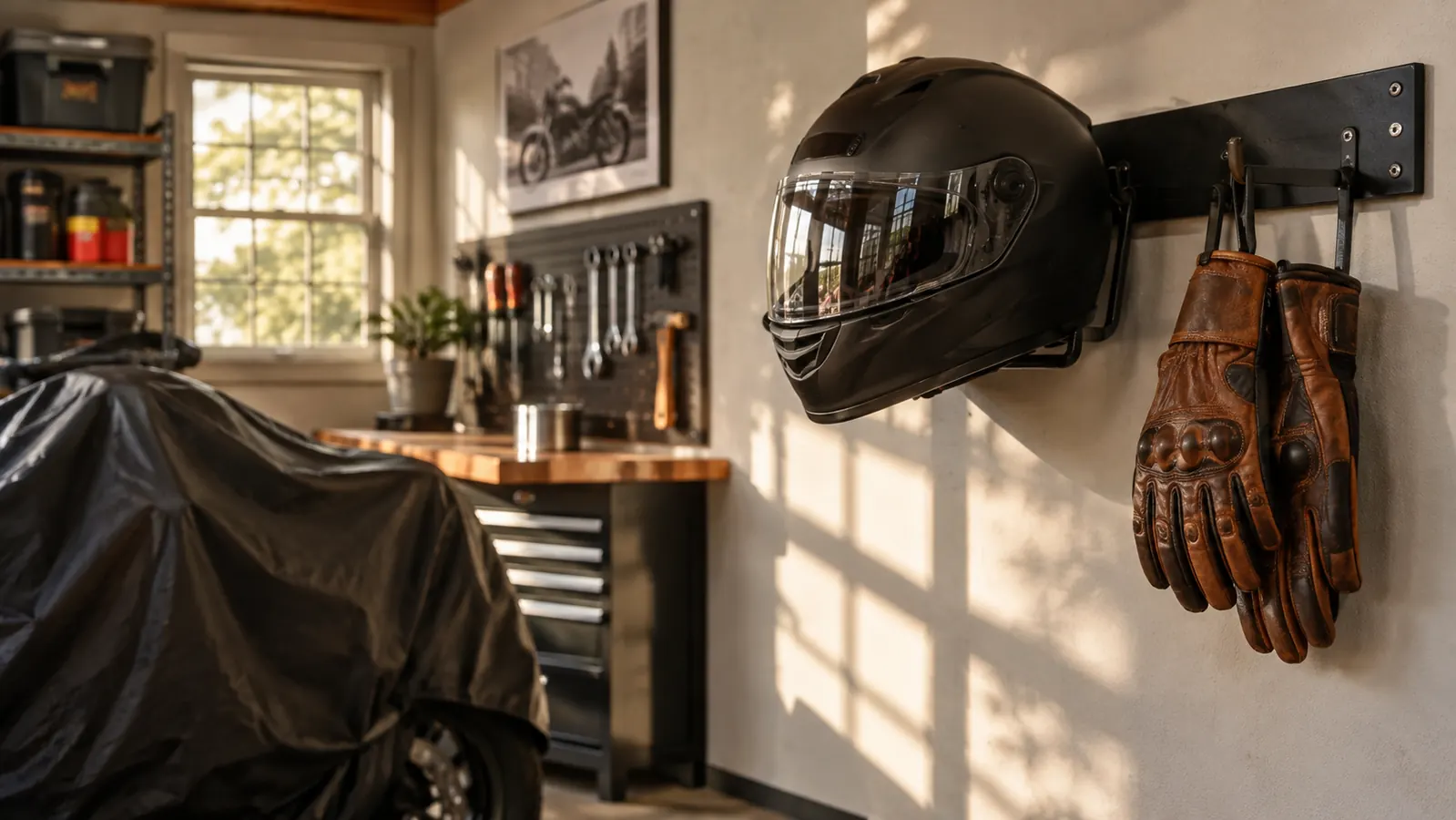
The Details You Only Notice After Hour Three
The listing puts the pair at 4.8 ounces and 12 by 6 by 2 inches packed. That is thin and light enough to ball up and shove in a saddlebag, which is where mine live when the morning starts cold and I want to be able to swap. If you have ever dug through a saddlebag for a glove and come up with one, you know why that matters.
I got the sizing wrong the first time. I ordered a Medium based on a glove I had owned years ago, and the fit across the knuckles was wrong in a way I did not catch until I was on the bike. Comfortable with my hand open, tight the moment I closed it around the grip. Up to a Large and that was the fix. The listing calls the fit relaxed and that matches what I found, but relaxed does not mean size down. Measure across your palm at the widest point and order to that number.
The cut is ambidextrous, so if you lose one glove on a windy day at a gas pump, you are not throwing away a hand-specific pair. Small thing, but I have done it, and it is the reason I no longer buy gloves shaped left and right.
Care is the one place you have to pay attention. Hand wash only. Wet leather needs to dry slowly and away from heat, so no setting them on the truck dash in the sun. I wash mine once a season in cool water with a little saddle soap, work the water out with a towel, and let them sit in the garage overnight. Six years of riding has taught me that heat is what kills leather, not water.
What I Liked
- Gel palm padding that stays put through a full day in the saddle
- Relaxed fit that does not fight your grip on the bars
- Adjustable buckle and hook closure you set once and forget
- Simple leather build with nothing extra to fail
- Light enough to keep a spare pair in the saddlebag
- Ambidextrous cut, so a lost glove is not a lost pair
Where It Falls Short
- No knuckle armor listed on the spec sheet
- Solid leather with no venting, so August afternoons run warm
- Hand wash only, and wet leather takes a day to dry
- No touchscreen-friendly fingertip
- Relaxed fit may feel loose if you like a tight performance glove
What the Cruising Glove Does Not Do
It does not protect your knuckles the way a hard-shell commuter or sport glove will, and I want to be plain about that. It is a leather glove with a gel palm. Leather does what leather does, and it does nothing more. If you are riding in heavy traffic daily, or you are the kind of rider who wants the most protection available, this is not that glove and I would not tell you it is.
It also does not vent. There is no mesh, no perforation, nothing to move air across the back of your hand. In July in Oklahoma you will feel that. I still wear mine, because a 200 mile day at highway speed moves plenty of air over a glove on its own, but a rider stuck at red lights in town will notice the difference and should probably own both pairs.
And it will not dry fast. If you get caught in a spring storm, and in Oklahoma you will, the gloves come home wet and stay damp for a day. I keep a spare pair in the saddlebag for exactly that reason, which is easy since the pair packs down to 12 by 6 by 2 inches and 4.8 ounces. The commuter pair with mesh panels was dry again before I finished my coffee.
Who Should Buy Which
Buy the Milwaukee Leather cruising gloves if your riding looks like mine. Weekend days, 100 to 250 miles, two-lane highways, a lunch stop and a tank of gas in the middle. Buy them if your hands are what gives out first on a long ride, because the gel palm is aimed directly at that problem. Buy them if you want a glove you put on in the garage and do not think about again until you pull back in.
Buy commuter gloves if your riding is short and frequent and hot. A daily twenty-minute ride to work, stop and go traffic, an August commute. Buy them if knuckle protection is a priority for you, or if you need to answer a phone at a light. Buy them if you want a glove you can throw in the washing machine and not think about.
If you can swing it, own both. My commuter pair lives by the door for weekday errands and the Milwaukee Leather pair hangs on the wall rack in the garage waiting for Saturday. That is not a cop-out answer, it is what I actually do. But if you are a cruiser buying one pair for the riding you love, the long day is the day you should buy for, and the cruising glove is the one built for it.
If Your Hands Are the Last Thing You Want to Think About
2,600 plus riders have rated this pair. Leather, gel palm, relaxed fit, an adjustable closure, and a limited warranty. Check the current sizing and today's price before your next long day.
Amazon Check Today's Price on Amazon →