
The first pair of riding gloves I ever owned got stiff enough to stand up on their own in the garage. I wore them for years anyway, which says more about my unwillingness to shop than about the gloves. When I finally replaced them, I wanted three things: leather, a little padding in the palm, and a closure I could work with one hand while holding a helmet under my arm. That short list is what led me to the Milwaukee Leather Cruising Gloves.
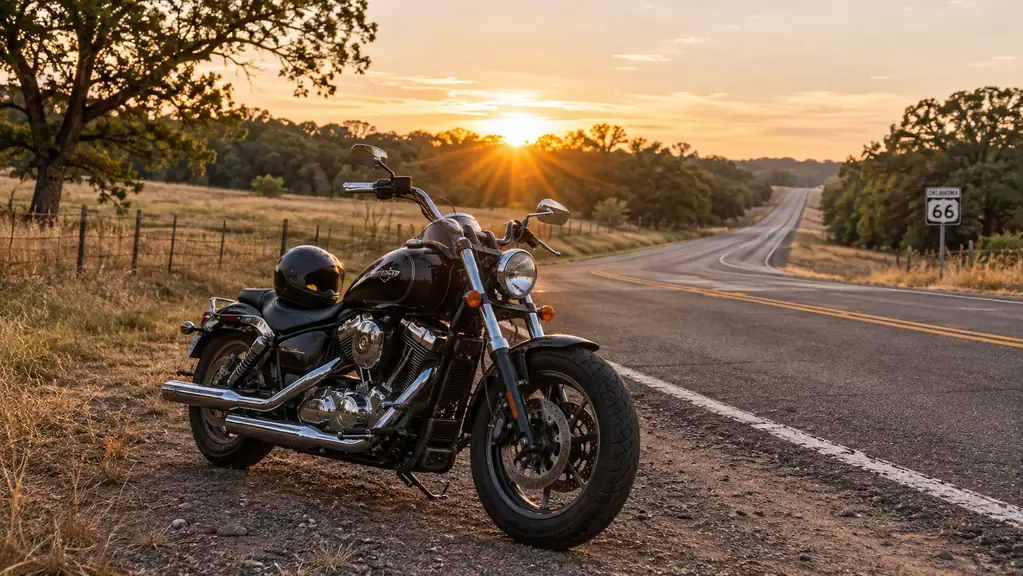
I am in Tulsa. My weekends are 100 to 250 miles on two-lane roads, Route 66 where the traffic is bearable and the lake roads around Grand Lake and Tenkiller where it is not. My cruiser is six years old and happiest at a pace that lets me look around. I am 51, I have been riding about 20 years, and I have no patience for gear that needs a manual. Here is what months of those miles taught me about these gloves.
The Quick Verdict
Plain leather, a gel palm, and a closure you can work with one hand. They do the simple job well and ask nothing of you, as long as you are not expecting armor over the knuckles or a fingertip that talks to your phone.
Amazon Check Today's Price →The pair I stopped thinking about
Leather, gel palm, adjustable wrist closure. After months of weekend miles they are still the first thing I grab off the wall rack.
Amazon Check Today's Price on Amazon →How I've Used It
They have been on my hands for nearly every weekend since March, plus a handful of weeknight errands where the truck stayed home. Size Large, which is what I normally take, and the relaxed fit meant no fight getting them on the first time. Leather gloves are usually miserable for the first week. These were stiff in the fingers for maybe four or five rides, then something gave and they started moving with my hand instead of against it.
The break-in was uneven, which is worth mentioning. The left glove softened faster than the right, probably because the clutch hand works more than the throttle hand on the roads I ride. For about two weeks I had one glove that felt broken in and one that still felt like a paper sack. By the fifth weekend they had evened out and I stopped noticing the difference. If you buy a pair and one side feels behind the other, give it another few rides before you decide you got a bad batch.
A typical Saturday for me is out of the driveway by seven, west on 66 or east toward the lakes, a stop for coffee and gas around the halfway mark, home before the heat gets serious. Somewhere around 200 miles, the difference between a glove that fits and a glove that does not stops being a small thing. The gel in the palm is the part I notice most on those days. That and the fact that I am not thinking about them at all, which is the highest compliment I can pay a piece of gear.
The longest single day I have put on them was 268 miles in late April, a loop out past Stroud, down toward Okemah, and back up through Bristow on a day that started at 52 degrees and finished near 80. That is the day I stopped wondering whether the gel palm was doing anything. My hands were tired at the end of it, but they were not sore, and there is a gap between those two words that I have spent years trying to close with other gloves.
They have also spent time in the truck. The listing says riding or driving and that is accurate. I keep them in the door pocket when I am hauling something, and they work fine on a steering wheel, which is more than I can say for the padded gloves I tried before these.
What the Gel Palm Actually Does
Years ago I had a low-speed slide on gravel. I walked away with scraped gear and a sore wrist that took a couple of months to settle down. That wrist is still the first thing that complains on a long day. So the gel palm was not a feature I shrugged at. It is the reason I bought these.
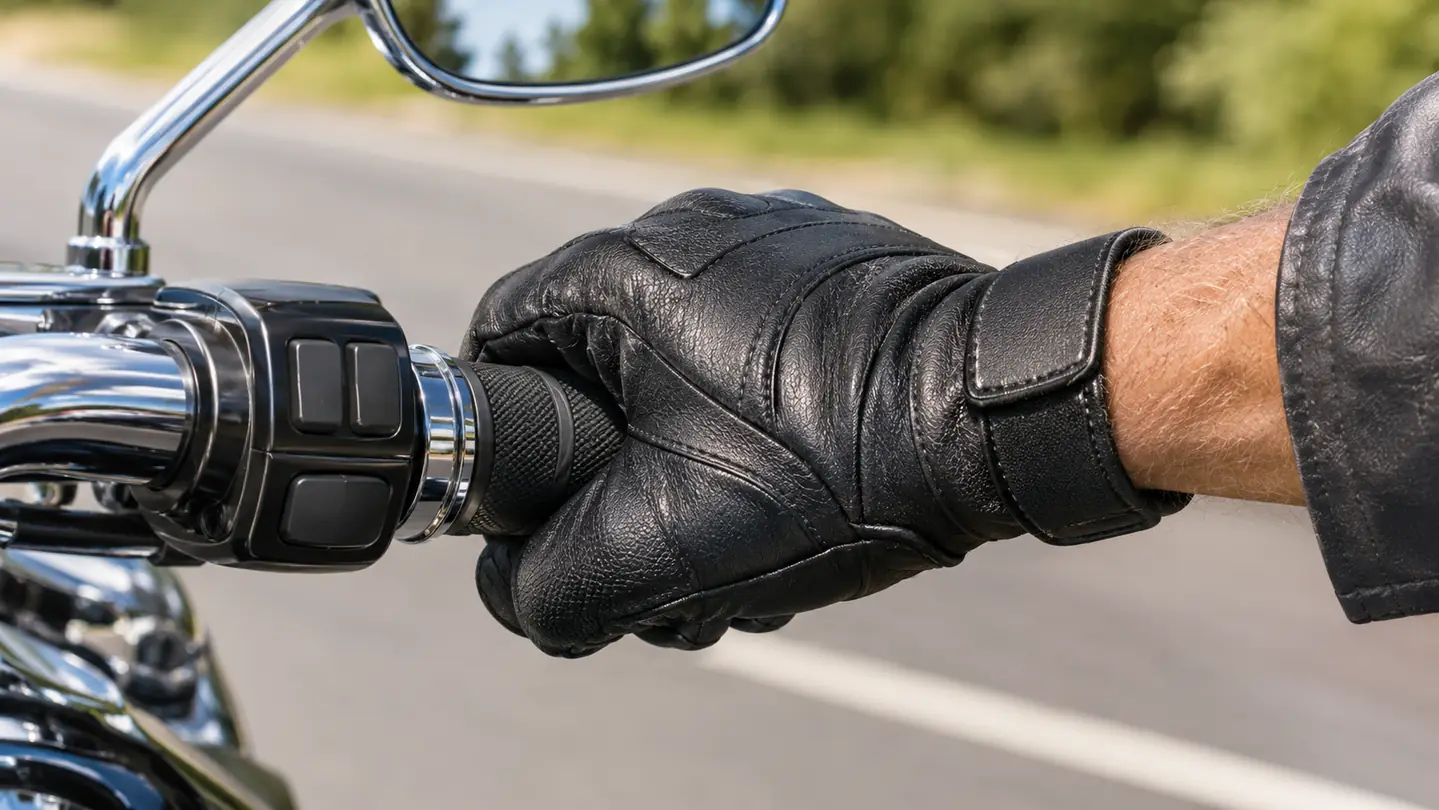
What it does is simple. It puts a layer of soft material between your palm and the grip, and it takes the edge off the constant low buzz a cruiser sends up through the bars. On a 200 mile day, the difference between a bare leather palm and one with gel in it is the difference between wanting to stop at 150 and being fine at 200. I will not tell you it fixes anything. It does not. It is padding. But padding in the right place, on a bike that hums, is worth having.
Before these I tried a padded glove with a foam insert sewn into the heel of the palm. It felt good in the store and went flat within a month. I also tried a gel cycling glove one summer, which was cooler but had nothing on the back of the hand, and one seventy mile afternoon taught me what gravel does to knuckles that are only covered in mesh. Neither of those was a bad product. They were just answering a different question than the one I was asking.
The padding sits where you actually grip, too. I have owned gloves where the gel was so far up the palm it did nothing except make the fit strange. These are placed sensibly, and after months of squeezing that gel it has not gone flat or bunched into a lump under my hand.
Fit, Closure, and What the Spec Sheet Says
The fit is relaxed, and I would call that accurate rather than generous. There is a little room across the back of the hand and the fingers are not tight. For summer riding in Oklahoma that is what I want, because a snug glove in August turns into a wrestling match by the second stop. If you like your gloves to feel painted on, size accordingly or look at a different pair.
For reference, my hand measures about eight and a half inches around the palm at the widest point, and the Large sits with room to spare without sliding around when I close my fist on the grip. If you are between sizes, my advice is to take the smaller of the two. The relaxed cut gives you some margin, and a glove that is too loose will rotate on the bar during a hard stop, which is a bad moment to discover the fit is wrong.
The closure is an adjustable buckle and hook arrangement at the wrist. It is a two-second job with one hand, which was on my list. The pair is built ambidextrous, meaning either glove goes on either hand. That sounds like a small thing until you are pulling them on in a dark garage at six in the morning and you do not have to check which one you picked up.
The rest of the Milwaukee Leather spec sheet reads the way you would expect: leather construction, solid pattern, relaxed fit, hand wash only, limited warranty, listed at 4.8 ounces and 12 by 6 by 2 inches. In the hand they feel light for leather, which I noticed most on hot days when heavier gloves start to feel like a punishment you chose for yourself.
How They've Held Up Over the Miles
I have put a lot of weekend miles on these since spring. They have been rained on twice, baked in a saddlebag once, and washed by hand a couple of times because the care instructions say hand wash only and I actually read them. The leather has creased the way leather does where my fingers bend. No splitting at the seams, no stitching letting go, no thinning at the fingertips.
The first rain was a spring squall on the lake road near Tenkiller that came out of nowhere the way they do here, and I rode twenty minutes through it with no pullover in sight. The gloves soaked through, which leather will do, and then dried stiff overnight in the garage. One ride the next morning and they were back to where they had been. That is not nothing. I have retired gloves that never came back from a soaking.
The gel is the part I expected to fail first. It has not. It is still in the same place it started and it is still doing the same job. The closure has held its adjustment. I have tightened it maybe once since I set it back in March.
The listing shows 4.4 stars across more than 2,600 reviews, and that tracks with my experience. Mostly people who wanted a plain, comfortable glove and got one, plus a few who wanted more protection than a leather palm can give. One honest note on care: hand wash only is not a suggestion I would ignore. I rinsed mine in cool water, worked out the salt, and let them dry flat away from the sun. If you run these through a washing machine, I do not think you will like what comes out, and I do not think that is a defect. The label told you.
Where They Fall Short
There is no armor over the knuckles. None. This is a leather cruising glove with gel in the palm, and if you are expecting a hard knuckle panel you picked up the wrong pair. I knew that going in and it is still the first thing I would mention to a friend who asked. Not every glove needs to be a heavy touring glove, but the tradeoff is real and you should know which side of it you are standing on before you order.
The fingertips are the other soft spot, and I mean that literally. There is nothing reinforcing the ends of the fingers, and I can already see the leather at my index fingertip taking on a shine where it works against the grip. It has not worn through and I do not expect it to this season, but it is the first place I would look if I were buying these used rather than new.
The second thing: leather in an Oklahoma August gets swampy. There is nothing in the build designed to move air across the back of your hand. The relaxed fit helps a little because there is some room to breathe, but sitting at a light on a 100 degree day, your hands will be warm. That is the material, not a flaw in these gloves specifically. If airflow matters more to you than feel, buy a mesh glove and accept that it is not leather.
What I Liked
- Gel palm takes the buzz out of a long day on the bars
- Adjustable buckle closure works one-handed with cold fingers
- Relaxed fit means no fight getting them on
- Light for leather at just under five ounces
- Ambidextrous, so either glove fits either hand
- No seam trouble after months of weekend miles
- Recovered fine after a soaking and an overnight dry
Where It Falls Short
- No armor over the knuckles
- Hand wash only, and the label means it
- Leather gets warm in real summer heat
- Relaxed fit will feel loose if you want a snug glove
- Fingertip leather shows wear first
By mile 150, the difference between a glove that fits and one that does not stops being a small thing. These stopped being noticeable around mile 30.
Who This Is For
Weekend riders on cruisers who want plain leather, a padded palm, and a closure they can work without taking the other glove off first. If your rides are 100 to 250 miles of two-lane road and you are more interested in being comfortable than in looking like a factory rider, these fit that job. They are also a sensible choice if you split time between the bike and the truck, since they behave fine on a steering wheel.
If you are new to riding and buying your first pair of gloves, this is a reasonable place to start. The relaxed fit is forgiving, the closure is simple, and there is nothing about the design that takes practice to figure out. The Milwaukee Leather price sits in the range where you can afford to learn what you like without treating the purchase like a commitment.
Who Should Skip It
If you want protection over the knuckles, skip these and go find a glove with a hard panel over the back of the hand. It will be heavier and warmer and you should accept that as the cost of the thing you actually want. If you ride in serious heat and need airflow, these are not that either. And if you like a glove that feels tight and precise around every finger, the relaxed fit will bother you inside a week.
One more: if you are hard on gear and want to throw it in the machine, do not buy leather. Hand wash only is written on the care instructions for a reason, and I would rather you skip these than ruin a pair and blame the glove.
Plain, padded, and easy to live with
Leather, a gel palm, and an adjustable closure that works with one hand. Months of weekend miles later, they are still on the wall rack doing the job.
Amazon Check Today's Price on Amazon →