
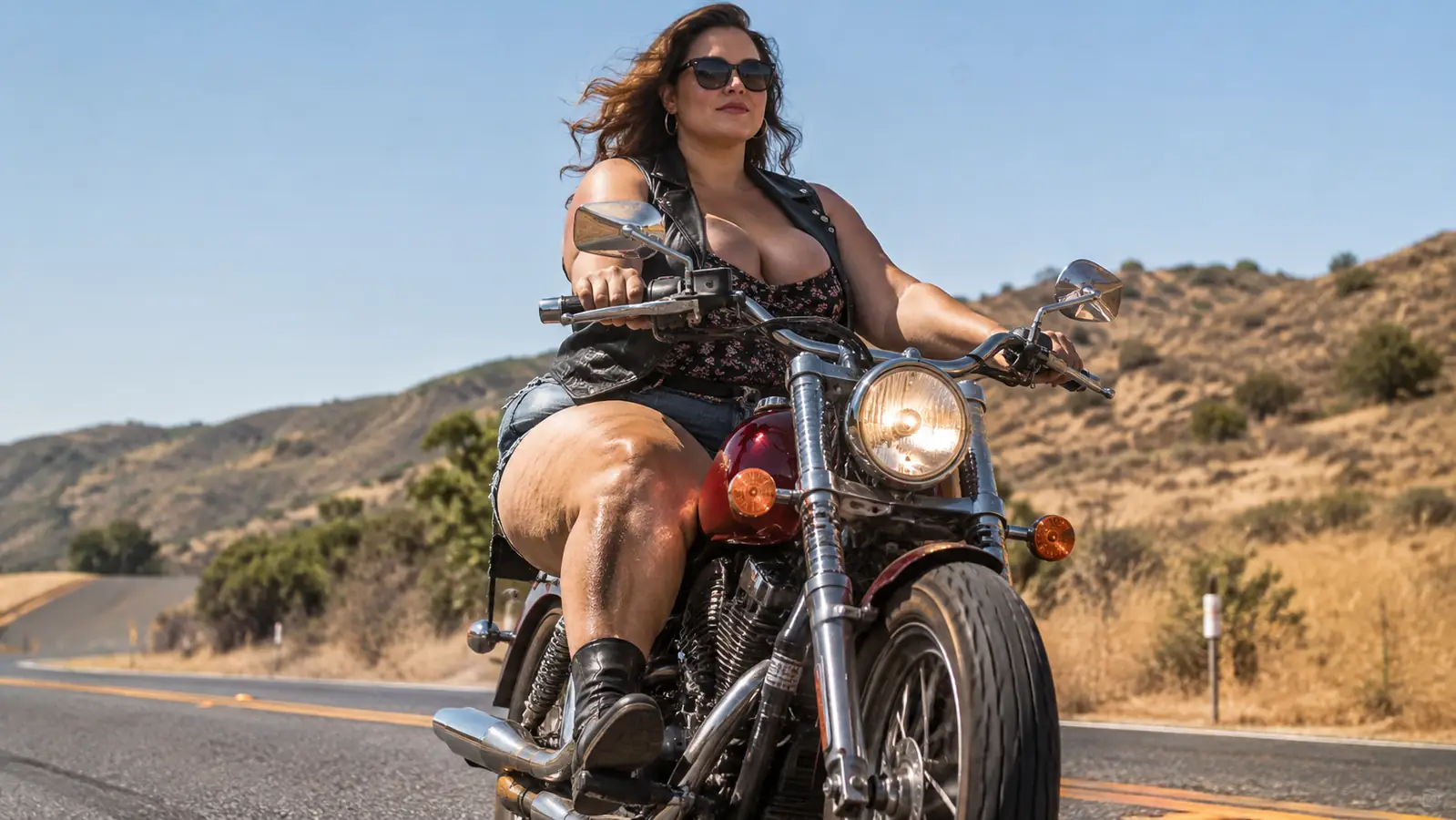
Oklahoma in July does not care how tough you are. I left Tulsa at nine on a Saturday morning with the thermometer on the garage wall already reading 88, and by the time I crossed the Verdigris the air coming off the pavement felt like somebody holding a hair dryer to my chest. For years I rode those days in a t-shirt because it seemed logical. Less fabric, more air. What I learned the slow way is that a t-shirt at highway speed is not cooler, it is just unprotected, and the sun does the rest. The thing that actually changed my summer riding was switching to a mesh jacket, specifically the BYKR mesh motorcycle jacket I have been wearing since spring.
Here is the part that took me a few rides to understand. Mesh does not cool you by itself. It cools you by letting air reach your skin so sweat can evaporate, and it only does that if the jacket fits right, if you are wearing the right thing underneath, and if you are actually moving. Get any of those three wrong and a mesh jacket is just a heavy shirt with a zipper. So this is less a review and more the system I use now, in order, on every hot ride.
The jacket that made July riding tolerable again
The BYKR mesh motorcycle jacket is what I reach for from May through September in Oklahoma. Mesh across the chest and down the long sleeves, a full-length zipper, four pockets, and a regular fit that keeps air moving through the jacket instead of around it.
Amazon Check Today's Price on Amazon →Step 1: Buy for airflow, not for the word mesh on the tag
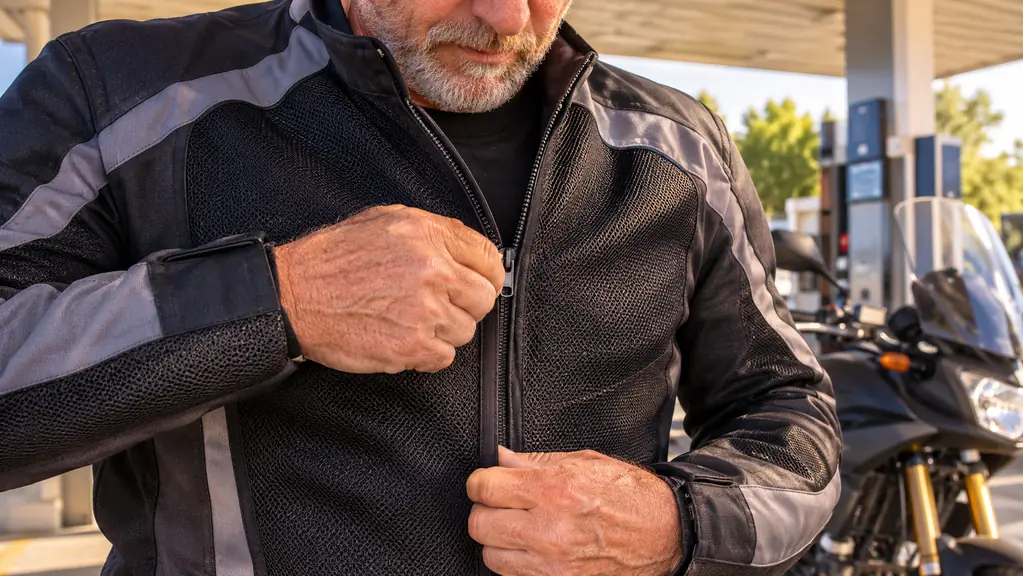
Mesh is not one material. It is panels of open weave stitched to solid sections, and where those panels sit decides whether you get airflow or just the idea of airflow. On the BYKR jacket the mesh runs across the chest and down the long sleeves, which is where I want it, because the chest is what catches air behind the small windshield on my cruiser. The first genuinely hot ride I took in it was a 96 degree afternoon on Route 66 west of Sapulpa, and I could feel air moving across my chest at 40 miles an hour, not only at highway speed. That is the test I use now.
Three things I check before anything else. First, can I feel air through the front panel when I hold the jacket up to a fan in the garage. Second, is there a full-length zipper, because a short front opening traps heat no matter how open the weave is. Third, is there enough solid material that the jacket does not inflate like a grocery bag at 70 miles an hour. A jacket that balloons is not cooling you, it is just making noise. The BYKR closure is a full zipper, and that single detail is why I can regulate temperature on a ride that starts at 72 and finishes at 98.
It also carries four pockets, which sounds like small talk until you are standing at a gas pump near Stroud at 101 degrees and want your wallet and phone off your body instead of pressed against your leg. I keep the phone in an outside pocket where it does not soak through. I also keep the wind protection in mind on early starts, since the jacket is listed as windproof as well as water resistant. On a six in the morning departure that matters more than you would think.
Step 2: Fit it close, and stop sizing up for airflow
The most common mistake I see, and the one I made first, is buying a size larger than you need because bigger feels cooler. It is the opposite. A loose mesh jacket turns into a parachute, the panels lift off your arms, and the air goes around you instead of through you. The BYKR is a regular fit, and I took my normal size in a jacket I would wear over a t-shirt. It sits close across the shoulders without pulling, and the sleeves stay put when I reach for the bars.
Check three spots in the mirror before you decide. Shoulders, where the seam should land at the edge of the bone instead of hanging past it. The waist, where the hem should stay put when you raise your arms overhead, because a hem that rides up leaves a gap at your lower back. And the collar, a band collar in this case, which should sit flat against your neck without choking you when you turn your head to check a lane. If any of those three are wrong, the size is wrong.
One more fit note for anyone who rides with a passenger. My wife Donna comes along on some of the shorter lake rides, and a jacket that fits right lets her hold on without grabbing a fistful of loose fabric. Loose gear is a nuisance for the rider and worse for the person behind you. Fitting it properly is not vanity, it is the difference between the jacket staying where it belongs and bunching up under your arm at the worst possible moment.
Step 3: What you wear underneath decides whether the mesh works
A mesh jacket over a heavy cotton t-shirt is a waste of a good jacket. Cotton holds sweat, stays wet, and once it is soaked it stops passing air. I switched to a thin synthetic or merino base layer and the difference on a 100 degree afternoon was bigger than the difference between my old textile jacket and the new mesh one. The base layer is supposed to move moisture off your skin so the airflow can evaporate it. That is the whole mechanism. Block it with cotton and you have paid for mesh and gotten nothing.
Color matters here too, for the base layer at least. A light base layer under the mesh reflects instead of absorbing, and on a long stretch of two-lane with the sun overhead you feel the difference. I also keep the base layer long sleeved. It sounds wrong in July, but bare arms under mesh dry out and burn, while a thin long sleeve keeps the sun off and still lets air through. The jacket is doing the abrasion work either way, which is the entire point of wearing it instead of the t-shirt.
On the early starts I add one thin layer under the jacket and peel it off by ten. That is the other advantage of a jacket with a full zipper and long sleeves: you can manage temperature in small steps instead of choosing between freezing at six and baking at noon. The BYKR is listed for mild, warm, and cold weather. I am not going to pretend it replaces a winter coat in an Oklahoma January, but it covers a much wider range than a pure summer jacket would.
Step 4: Ride around the heat instead of through it
Mesh only works when air is moving, and the hottest part of an Oklahoma summer day is exactly when traffic stops moving. That is the trap. A mesh jacket is comfortable at 55 miles an hour with a breeze and miserable at 5 miles an hour in a construction backup with the sun straight down. So I plan around it. I leave the garage by seven, I am on the back roads before the pavement heats up, and I am headed home by two. A 150 mile day ridden early feels shorter than 60 miles ridden at the worst of the afternoon.
Stops matter as much as speed. I stop every 60 to 75 minutes, and I stop in shade whenever there is any. At each stop the jacket comes off, I drink something that is not soda, and I let the base layer dry a little before I put it back on. Twenty years of riding taught me that heat problems build up quietly. You do not notice you are getting cooked until your reaction time is already gone, and by then you are on a two-lane road with a truck coming the other way.
The lake roads around Grand Lake and Tenkiller are my usual run, and they help because they are shaded in spots and slower in the curves. The trade is that slower means less airflow. I will take that trade on a hot day over an hour of straight highway with the sun on my shoulders, but I still keep the pace up in the open stretches. If I find myself stuck behind a camper at 25 miles an hour, I open the front zipper partway and let the air in that way.
Step 5: Keep the mesh clean and the zippers working
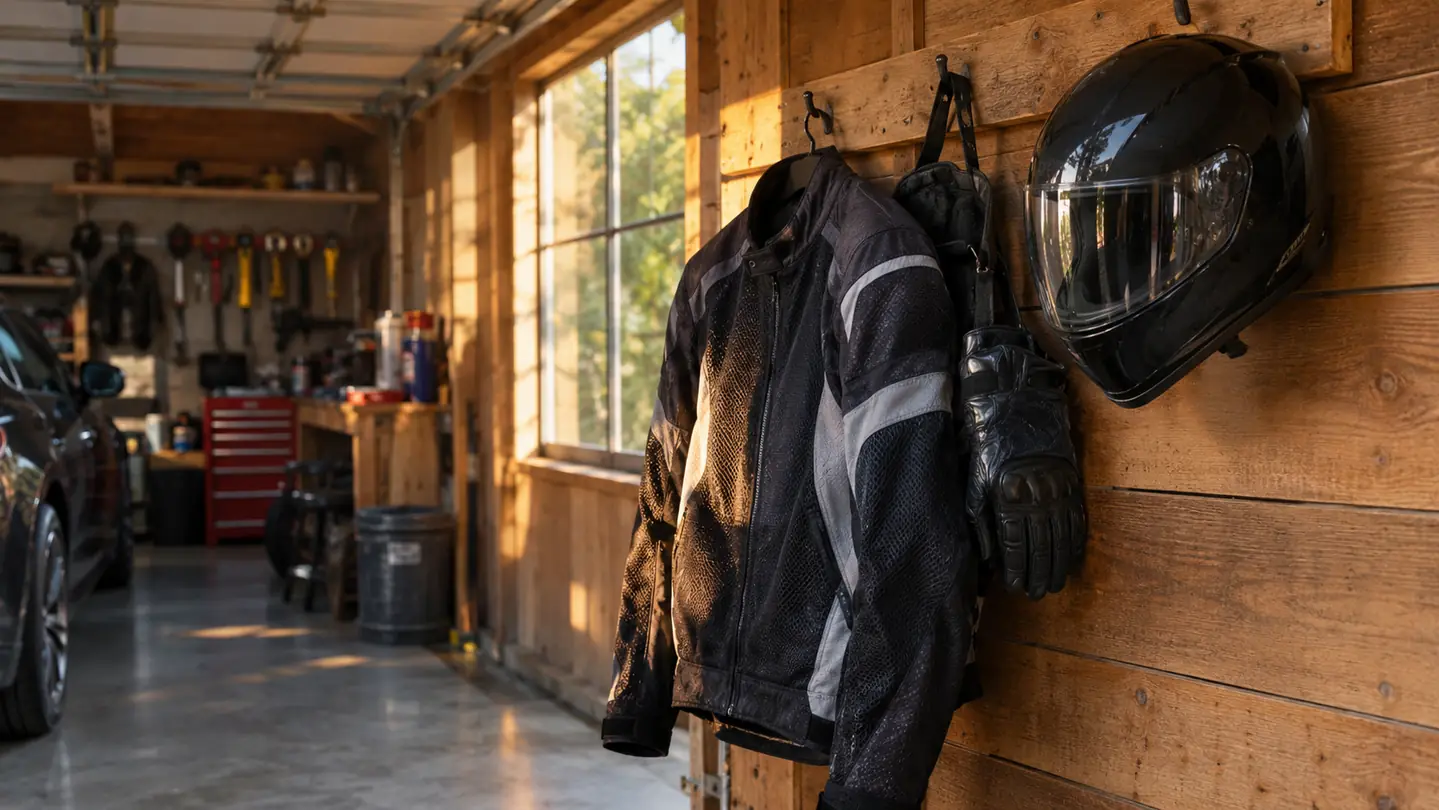
Mesh collects bugs, dust, and sunscreen, and all three clog the weave. I rinse the jacket in cool water every few weeks during the season, hang it on the rack in the garage to dry out of direct sun, and I never put it in the dryer. Heat is what kills mesh and coatings. A jacket that has stopped flowing air is usually just dirty, not worn out. The first time I washed mine properly, in mid June, I got back a noticeable amount of airflow on the very next ride.
The zipper gets the same attention. A full-length zipper is the main control you have over your temperature, and a zipper that snags is one you stop using. I run a bit of zipper wax along the teeth a couple of times a season and it stays smooth. Same for the pocket zips, because a phone that falls out of a chest pocket at 60 miles an hour is gone for good. Small maintenance, ten minutes, and the jacket lasts several seasons instead of one.
One honest limitation: the water resistance on any mesh jacket is not a rain suit, and windproof does not mean storm proof. Oklahoma spring storms show up fast and hard, and when the radar turns red I pull over and put on a proper shell rather than testing the jacket. That is not a knock on the BYKR, it is what mesh is. Plan for it and you will never be caught out. Ignore it and you will be wet and cold in ten minutes flat.
What Else Helps
The jacket is the biggest piece, but it is not the only one. Helmet vents open all the way, a light glove instead of a heavy leather one, and a cooling neck wrap that I soak at a gas station and drape under the collar. Those three together buy me about an hour of comfort on a really bad afternoon. Water is the other one. I carry a bottle and I drink at every stop whether I feel like it or not, because thirst shows up after the problem has already started.
I also check the forecast for the ride home, not just the ride out. Morning is easy in Oklahoma. Afternoon is where the heat and the storms both live. If the heat index is going to be over 105, I shorten the loop and stay closer to home. That is not giving up on riding, that is riding for a lot of years instead of one hot Saturday. The gear helps, but the decisions do more.
At 55 miles an hour in 96 degree heat, air moves through the BYKR mesh and keeps moving. That had never once happened in my old textile jacket.
Get the jacket that lets you ride through August
Mesh panels across the chest and down the long sleeves, a full-length zipper you can open at a stop, four pockets, and a regular fit that keeps the air flowing through instead of around. It is what I wear from May to September in Oklahoma.
Amazon Check Today's Price on Amazon →