

Twenty miles into a two-lane stretch of Route 66, my right hand stops reporting in. Not asleep exactly. I can feel the bar under my palm, but the fingers on the front brake feel like they belong to somebody else, and my first instinct is to squeeze harder, which is the worst thing I can do. By the time I pull into the next wide spot, I am shaking my hand out like I just came out of a cold lake.
I rode for years assuming that was just how a long day went. Then I started actually paying attention to what was happening. It was not one thing. It was the grip I was carrying, the fit of the glove, the fact that I never got off the bike, and the fact that the padding I had was sitting about a quarter inch from where the pressure actually lands. A gel palm glove like the Milwaukee Leather cruising glove helps, but only if you set it up on purpose. What follows is the order I do things in now, and it starts before I ever pull a glove on.
The Pad Only Works Where It Lands
Gel under the heel of the palm, leather over the knuckles, a buckle and hook closure you can snug down. Get the size right and everything below gets easier.
Amazon Check Today's Price on Amazon →Why Hands Go Numb Before the Tank Is Empty
Three things cause it, and they stack on each other. Pressure on the heel of the palm, right where the ulnar nerve runs close to the surface. Vibration coming up through the bars, which that same nerve does not tolerate well. And a glove that pinches across the knuckles or floats loose in the palm, so you end up gripping harder to make up for it. Add heat, a headwind and a death grip and you get the tingling that starts in the ring and pinky fingers and works its way up into the wrist.
Here is the part worth sitting with. None of that is a failure of the motorcycle or a failure of you as a rider. It is a pressure problem, and pressure problems respond to setup. The glove is one piece of the setup. It also happens to be the piece you can change in ten minutes in the garage on a Saturday morning, which is why I start there instead of with the front end of the bike.
Step 1: Loosen Your Grip and Ride From the Elbows
Most riders I know, myself included, hold on like the bars are going to get away from them. That grip does two bad things at once. It puts your body weight onto the heel of your palm, which is exactly where the nerve sits, and it locks your arms straight so every bump travels up into your shoulders and back down into your hands. The fix is boring and it works. Elbows bent, wrists flat, fingers wrapped light enough that you could roll off the throttle without thinking about it.
The way I trained myself out of it was a drill on an empty back road. Every time I came to a long straight with nobody around, I opened my fingers for a second and let them rest on top of the levers without gripping. Not letting go of the bike, just stopping the squeeze. You find out fast how much of your weight is sitting on your palms. Mine was a lot. That weight has to go somewhere, so I started carrying it in my core and letting my elbows do the absorbing.
One more thing about grip. Hand strength fades over a long day. It just does. If your hand is working hard at mile twenty, it will be working harder at mile eighty, and the harder you squeeze the less blood gets through. A loose grip on a padded surface beats a tight grip on a bare one every time, and that is the whole argument for the gel palm before we even get to fit.
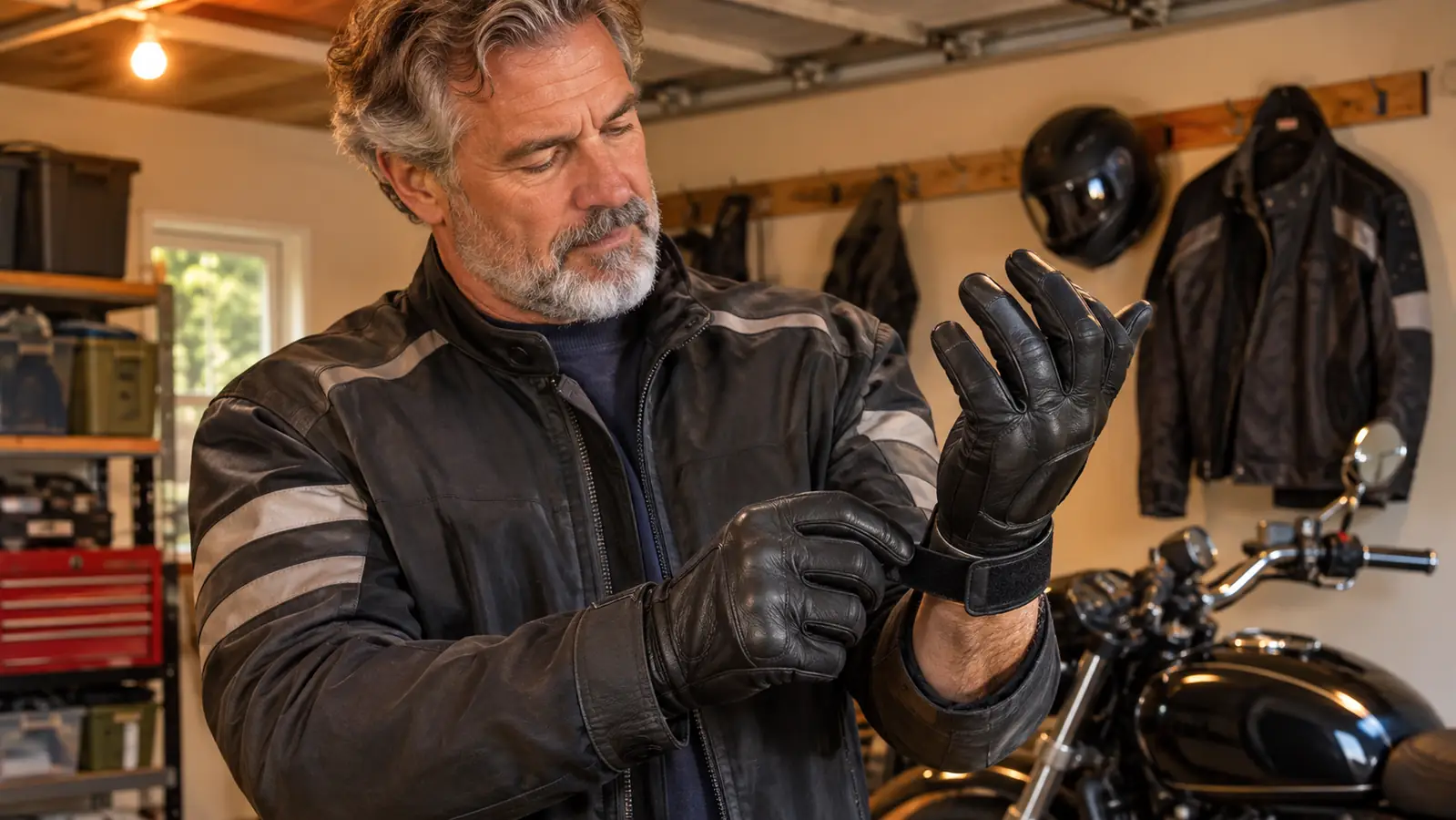
Step 2: Land the Gel Pad on the Pressure Point
This is where most people get it wrong and then blame the glove. The gel has to sit under the heel of your palm, below the base of the ring and pinky fingers. If it slides forward into the middle of your palm, it is not touching anything that hurts. If it sits too far back toward the wrist, it is under the strap and doing nothing at all. Pull the glove on, wrap your hand around something about the size of your grip, and look at where that pad actually lands.
Fit matters more than most riders want to admit. Measure around your knuckles with your hand flat. My Milwaukee Leather pair is a Large, and the fit is listed as relaxed, which means there is room in the glove without the palm floating around. Do not size up to get room. Sizing up gets you a pad that shifts and a palm that bunches under the grip, and bunching feels like a wrinkle under your hand all day long. Do not size down hoping it will break in, either. Tight leather across the knuckles is a tourniquet with a nice finish.
Set the closure last. The buckle and hook closure at the wrist is there to keep the glove from riding up, not to squeeze your wrist flat. Snug enough that you cannot pull the glove off with a tug, loose enough that you can slide a fingertip under the strap. If your hand is throbbing at a stop, that strap is the first thing to loosen, not the last.
Step 3: Keep the Leather Soft and the Fit Consistent
Leather stiffens up with sweat and road salt, and stiff leather makes you fight the glove, which makes you grip harder, which brings the numbness right back. The maker says hand wash only and I believe it. A little mild soap, cool water, work it in by hand, rinse it out, and let them dry away from heat. Do not set them on the exhaust to dry. I have seen that done. It does not end well.
The pair I use comes in at 4.8 ounces, which is light enough that I can still feel the switch housings and the lever under my fingers. That matters to me more than padding thickness. You want enough material between your hand and the bar to spread the pressure out, not so much that you are working the controls through a mattress. A glove you can feel through is a glove you can relax inside of.
Check the seams and the pad at the start of every season. A pad that has flattened out is not doing the job anymore, and a seam that has started to open under the palm is going to rub a hot spot into your hand by lunch. Milwaukee Leather backs the glove with a limited warranty, but a warranty is not much help on the shoulder of the highway. Look at them in the garage before you leave.
The gel only does its job where it lands. Move it a quarter inch off the heel of your palm and you are carrying padding you never touch.

Step 4: Break the Ride Into Segments
A 200 mile day on Oklahoma back roads is not one ride. It is four or five rides with stops in between, and I plan it that way. I stop every 45 to 60 minutes whether I need fuel or not. That sounds like a lot until you do it once and notice the difference at mile 150. Getting off the bike, taking the gloves off and letting air get to your hands resets the whole system.
At each stop I do the same short routine. Gloves off. Open and close my hands twenty times, slow, all the way open and all the way closed. Shake them out. Then reach both arms overhead for a count of ten, which pulls the blood back down and takes the stretch out of the forearms. It takes about two minutes and it buys me another hour of feeling my fingers.
Donna rides pillion with me on the lake roads and does the same thing at stops, minus the gloves. Same principle whether you are holding bars or holding a grab rail. The people who finish a long day feeling fine are the ones who got off the bike before their hands told them to.
Step 5: Take the Vibration Out of the Bike, Not Just the Glove
The glove dampens vibration. It does not remove it. If the bars are buzzing at highway speed, that is a bike problem and it has bike solutions. Bar end weights that are actually weighted, not just decorative. Tires balanced properly. Engine mounts in good shape. A belt or chain at the right tension. I spent most of a season blaming my gloves for a buzz that turned out to be a tire that needed balancing, and the gloves got a lot better the day I fixed the tire.
Wind is the other half of it. When a headwind is pushing your chest back, your arms and hands take the load. A windshield, even a small one, changes how much you are hanging on. So does sitting up instead of lying on the tank. On a long open stretch a throttle assist can give your right hand a rest, but it does not belong in traffic, and it does not replace a hand on the bar when you need one.
This is also where I say the obvious thing out loud. Numb hands are a comfort problem and a safety problem, in the sense that you cannot brake well with fingers you cannot feel. But riding gloves are not crash protection for your hands the way a helmet is for your head. They help with abrasion and they help with pressure. They do not make a crash survivable, and nobody should sell you one that way.
What Else Helps
Hydration is the one nobody wants to hear. Being short on water thickens your blood and makes every circulation problem worse, and riding in Oklahoma heat in July will do that to you before you notice. I carry water and I drink it at stops even when I am not thirsty. Loose jacket cuffs help too. Anything bunched or tight at the wrist is working against the blood flow you are trying to restore.
Bar position is worth a look. Riser and bar back changes that bring the grips closer and higher take weight off your palms and put it back on your seat bones, where it belongs. It is a bigger project than a glove, but if you have tried everything else, it is often the real answer. And if the numbness comes on early, hangs around after you get off the bike, or wakes you up at night, that is a conversation with a doctor and not a gear problem. Carpal tunnel is common in riders and it does not care how good your gloves are.
The order I use is grip first, fit second, glove care third, stops fourth, and the bike last. The Milwaukee Leather cruising glove sits in the middle of that list and does its part. It puts gel where the bar meets the heel of my hand, it closes with a buckle and hook strap I can set once and forget, and at 4.8 ounces I can still feel the controls. But it works because the rest of the routine is in place. A glove by itself is just a glove.
Set Your Hands Up Before the Next Long Day
Gel palm, relaxed fit, buckle and hook closure at the wrist. Size it right, land the pad on the heel of your palm, and give your hands a break every hour.
Amazon Check Today's Price on Amazon →