
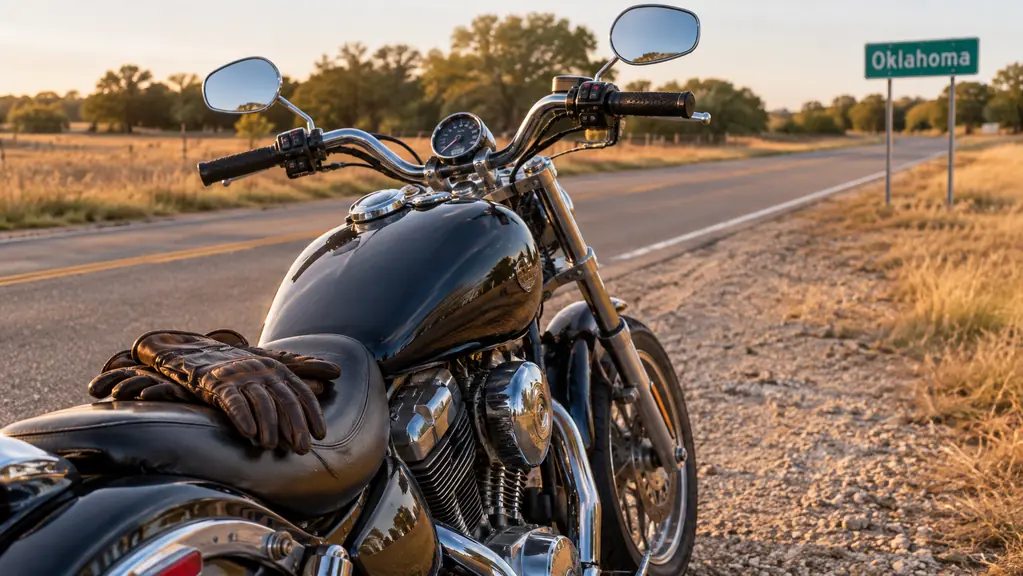
Nobody buys gloves first. You buy the bike, then a helmet, then a jacket, and the gloves show up somewhere after that, usually the week your hands start aching on the ride home. I did it in that order for years. I ride a mid-size cruiser out of Tulsa, weekend days of 100 to 250 miles on Route 66 and the lake roads around Grand Lake and Tenkiller, and I have been at it about twenty years. This spring I put a pair of Milwaukee Leather cruising gloves on and left them on for the whole season. What follows is the version of this review I wish somebody had handed me before I ordered, including the parts that are not flattering.
The short version: these are good gloves for what they cost, and they are not the last pair you will ever own. The leather is real leather, the gel pad lands where a cruiser bar puts its pressure, and the relaxed cut means my hands are not packed tight after two hours. What nobody tells you is that the sizing runs generous, the break-in takes longer than the listing suggests, and the palm padding is aimed at one particular kind of handlebar. If your bars are not that kind, keep reading before you click anything.
The Quick Verdict
Real leather, a gel pad in the right place and a relaxed cut built for cruiser bars. Order down a size if you are between sizes, and give them two weeks before you judge them.
Amazon Check Today's Price →The pair that lives by my garage door, not in the bottom of the saddlebag
Milwaukee Leather builds these with a leather shell, a gel palm and a hook closure at the wrist. Mine have a full Oklahoma season on them and they are still the pair I reach for on a Saturday.
Amazon Check Today's Price on Amazon →What Nobody Tells You: The Sizing Is Generous
The listing says Large and Large is what showed up. Relaxed fit is not filler in this case, it is the actual cut of the glove. My hand measures about nine inches around the knuckles, which puts me in a Large in most work gloves, and out of the bag this Large was roomy across the back of the hand. Not sloppy. Roomy. My fingers had maybe a quarter inch of play at the tips, which is what you want on a motorcycle glove anyway, because a glove that pinches your fingertips pulls your hand off the grip at the worst possible moment.
The catch is the closure. The hook at the wrist will pull in a little slack, but it will not shrink a glove that is a full size too big. If you measure between two sizes, take the smaller one. If you have wide hands, the relaxed cut is a gift, because a lot of cruiser gloves assume a narrow hand and these do not. That is the single most useful thing I can tell you and it is not in the listing.
One more sizing note that never shows up in the photos. Gloves do not break in evenly. The leather softens where your hand flexes and stays stiff where it does not, so a glove that feels slightly large on day one can feel correct by week three. Mine did. That is an argument for not panicking about the initial fit, and also an argument against ordering up for extra room you do not need.
What the Listing Photos Do Not Show
Photos of gloves tell you almost nothing. What I could not see before ordering was how the inside is finished. There is no heavy lining, which is why they do not feel bulky in the hand, and the seams are flat enough that I never once felt one under my fingers. I had a cheaper pair a few years back where the seam at the thumb ran right across the joint, and after an hour it felt like a small pebble working at my hand. These do not do that, and I did not know to check for it before.
The other invisible thing is weight. The listing puts them at just under five ounces, and that is about right in the hand. Light enough that you forget you are wearing leather, heavy enough that it does not feel like a costume glove from a costume shop. For a cruiser rider that balance matters more than it sounds, because a heavy glove tires out your forearms by the end of a long day and you feel it in your shoulders before you feel it in your hands.
The last unseen detail is the wrist. The cuff ends at the wrist bone rather than running up the forearm. With a jacket that has a knit cuff, that is fine, the two overlap and nothing gets in. With a jacket that has a loose leather cuff, you can get a small gap of air at the wrist if you are not paying attention. I noticed it once on a cold morning in March and fixed it by tucking the glove cuff under the jacket cuff. Not a defect, just something to know.
How I Have Actually Used Them
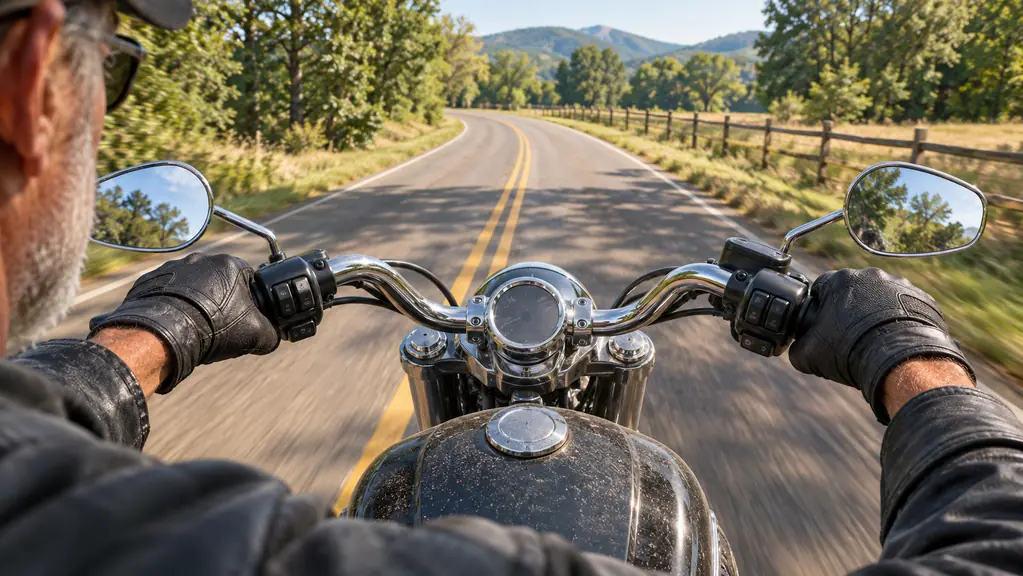
My riding is weekend riding. Saturday or Sunday, usually 120 to 180 miles, sometimes 250 if the weather holds and Donna does not have plans for me. Route 66 east of Tulsa, the two lanes around Grand Lake, the Tenkiller loop when I have the whole day. That is a different use case from a commuter grinding out twelve miles each way in traffic, and I want to be honest about that, because a fair number of the fit complaints I read before ordering came from people doing something else entirely with them.
The first real test was a 160 mile day in late June. Oklahoma in June is 95 degrees with a south wind that feels like a hair dryer blowing in your face. Leather gloves in that weather are not a cool choice and these are no exception. My hands were damp by the second hour. Leather does not breathe much, because leather does not breathe much. What surprised me is that the inside did not bunch or roll under my fingers once I sweated through them, which is the failure I have had with cheaper gloves and the reason I stopped wearing the last pair.
Stop and go is its own test. Route 66 through the small towns east of Tulsa is a lot of rolling up to a stop sign and pulling away again, and a glove that fights you at the closure is a glove you quietly stop wearing. The hook closure takes a second to open and a second to close, one handed, which sounds trivial until you have done it forty times in an afternoon. Mine has not come loose on its own and it has not dug into the top of my wrist. That is a low bar and a lot of gloves miss it.
Rain is the other test and I got caught in it twice, once on the way back from Grand Lake with about forty miles still to go. Wet leather gets slick on the outside, and more to the point your grip on the bar changes as it softens. The gel palm actually helped here, not because gel grips better, but because the pad kept my hand from sliding around inside the glove. They took a day and a half to dry on the wall rack in the garage and came back stiff, then loosened up again after a ride. That cycle has repeated twice now with no cracking at the seams.
What the Gel Palm Actually Does, and Where It Stops Helping
The gel sits across the base of the palm and the heel of the hand, which is exactly where a cruiser bar presses when your arms are out in front of you. That is the whole point of the design and it works. Before these I was running a plain leather work glove, and by mile 90 my right hand, the throttle hand, was doing that thing where you shake it out at every stoplight. With the gel pad I make it to the end of a 150 mile day without that little ritual.
Where it stops helping is the fingers. There is no padding across the knuckles and none in the fingers themselves, so if your problem is finger numbness from vibration coming up through the bars, this glove will not solve it. Mine got better because I swapped the stock grips, not because of the gloves, and I want to be clear about that. It would be easy to credit a piece of gear for something that another change actually fixed.
The other limit is bar type. If your bars put your weight on the heel of the hand near the wrist, the pad is in roughly the right place. If you ride upright with your weight on the base of the fingers, you are paying for padding that sits an inch behind where you need it. That is not a defect. It is a design aimed at a kind of bike, and knowing which kind you ride is worth more than any star rating on the page.
The gel pad is not magic. It is padding in one specific place, and that place happens to be where a cruiser bar presses.
The Break-In Nobody Warns You About
Out of the bag these felt like driving gloves that had been left in a cold garage overnight. Stiff across the back, stiff at the thumb, and the seam between my thumb and index finger was noticeable for the first three rides. Nothing sharp, nothing that left a mark on me. Just present, the way new leather is always present. If you put them on for a ten minute ride around the block and decide they are not for you, you have not really tried them yet.
By ride four or five the back of the hand had softened and the thumb seam had stopped announcing itself. By the third week they felt like gloves I had owned for years. That is a normal break-in for real leather at this level, and it is the reason I would not hand these to somebody as a first pair the day before a long trip. Give them a couple of short rides and a few hours of yard work first. They come around.
Care is simple and not optional: hand wash only. Not the washing machine, not the dryer, not the bucket of soapy water you leave them sitting in overnight. I wash mine in cool water with a little saddle soap, work the dirt out of the palms, rinse them, and hang them on the rack. Then, and this is the step people skip, I put a light coat of leather conditioner on while they are still a touch damp. Do that and the leather stays supple. Skip it and you get the crispy glove problem by August.
What I Liked
- Real leather shell that softens into a good fit after two or three weeks
- Gel palm sits where a cruiser bar actually presses
- Relaxed cut leaves room for a wide hand without pinching the fingertips
- Hook closure at the wrist takes up slack and stays put on its own
- Plain enough to wear driving a truck without looking like you rode in from a movie set
Where It Falls Short
- Sizing runs generous, so ordering your usual size can leave the glove roomy
- No padding in the fingers or across the knuckles
- Hot in Oklahoma summer heat, leather simply does not breathe
- Hand wash only, and skipping the conditioner shortens their life
- Break-in is real, about two to three weeks of regular riding

What I Would Change If I Ran the Factory
Two things. First, put the size guidance in the listing photos instead of buried in the description, and say plainly that the fit is relaxed. A good share of the complaints I read before ordering were size complaints, and a good share of those would go away with one clear line and a tape measure. Second, add a thin strip of padding across the base of the fingers, not the knuckles. A leather glove does not need knuckle armor for cruising. The fingers are where the vibration shows up first for a lot of riders.
I would not change the leather, the closure or the cut. The hook closure is simple and it has not slipped on me, which is more than I can say for the strap setup on a pair I owned a few years back. Simple is good on a glove. Fewer things to fail while you are doing 60 on a two lane with a grain truck coming the other way.
Who This Is For
You ride a cruiser or a standard with bars that put your hands out in front of you. You do 100 to 250 mile days rather than a daily commute. Your main complaint is palm pressure rather than finger buzz. You want real leather without paying custom shop money for it, and you are willing to ride them for two weeks before you decide whether you like them. If that describes you, these are a sensible buy. I have a full season on mine and the only wear showing is a light polish mark on the throttle palm, which is normal on any leather glove you actually use.
Who Should Skip It
Skip these if your bars put your weight on your fingers, if finger numbness is your problem, or if you ride in serious heat and need ventilation more than you need leather. Skip them if you want a glove that fits perfectly out of the bag, because these will not. Skip them if you are between sizes and not willing to order down. None of that is a knock on the glove. It is a glove with a specific job, and the job is cruiser bars in mild to warm weather with a rider who does not mind breaking in leather.
Bottom Line
If you want a number, 8.2 out of 10. It loses points for the generous sizing, the missing finger padding, and the fact that an Oklahoma July will have you wanting a second vented pair. It gains them back for real leather that breaks in properly, a gel pad in the right place for cruiser bars, a closure that works one handed, and a build that has held up to a full season of weekend riding without a single seam letting go. Milwaukee Leather got the important parts right.
Would I buy them again? Yes, and I would order a size down from the start. That is the whole review in one line. Everything else is detail.
If your hands ache at mile 90, this is the simplest fix on the list
Leather shell, gel palm, hook closure, relaxed fit. Order one size down if you are on the fence. A full season of Route 66 and lake roads says they hold up.
Amazon Check Today's Price on Amazon →One honest note to close on, because I take gear seriously after a low speed slide on gravel years ago that left me with scraped gear and a sore wrist. A pair of leather gloves is abrasion protection for your hands and a comfort item for your palms. It is not armor and it does not make a crash survivable. Wear them because your hands are the first thing you put out and the last thing you think about. That is all I would ask of anybody.